
Reliable Drug Detection and Identification Using Handheld HPMS (High Pressure Mass Spectrometry)
Drug detection refers to the process of alerting there is a presence of drugs within a given sample. This process is critical in various sectors, including law enforcement, where the timely detection and identification of drug use or presence can significantly impact outcomes. Utilizing advanced technologies and methods to ensure accuracy and reliability is also important.
Drug identification is determining the specific type of drug present. This step is crucial for appropriate intervention, as different drugs require different handling, treatment, and legal responses. Accurate drug identification is necessary for understanding the nature of the drug’s components, whether it involves prescription medications, illicit drugs, or new synthetic substances.
Both processes are integral in creating effective strategies for managing drug-related issues. Reliable drug detection and identification methods can prevent overdoses, support legal proceedings, and aid in dismantling drug networks.
Drug detection and identification methods have evolved significantly, integrating advanced technologies. These methods need to be both sensitive and specific to ensure that drugs are identified accurately, even in trace amounts. When using HPMS technology, the ability to perform trace analysis means users don’t need to handle the substance directly. HPMS devices can analyze residue from the outside of a container or a surface, significantly minimizing exposure to potentially lethal drugs.
The Importance of Reliable Drug Detection
Timeliness in drug detection is critical. Rapid identification of narcotics can prevent overdoses and fatalities, offering a direct benefit to public health. It also allows law enforcement to act swiftly, potentially disrupting illegal activities before they escalate and reducing the risk of health threats. Fast drug detection is critical for public safety, as it allows for a situation to be contained before it escalates.
Recent technological advancements have made sophisticated detection equipment portable by miniaturizing their internal components. Handheld devices equipped with these technologies enable first responders to conduct on-site drug analysis. This mobility is a game-changer, reducing the time between detection and action. The evolution of portable drug detection technology has been rapid. What once required a full laboratory setup can now be accomplished with a portable device that can be used for in-field analysis.
Benefits of On-Site Drug Identification
Portable devices allow first responders to perform immediate drug identification at the scene. This instant feedback helps officers make informed decisions quickly, eliminating the delay between detection and action.
When first responders arrive at a drug-related incident, the ability to rapidly identify narcotics can significantly impact the outcome. Immediate identification of unknown substances reduces the risk to everyone involved. By knowing exactly what substance they are dealing with, first responders can take the proper precautions, which enhances safety in potentially volatile situations. Quick identification also improves efficiency, allowing for streamlined operations and faster incident resolution.
When Time is of The Essence
Portable detection devices provide instant results, eliminating the need for transporting samples to a laboratory. This not only saves time but also reduces the potential for sample contamination. The entire process becomes more streamlined, from the initial detection to the final report. In high-pressure situations, this efficiency is crucial, allowing responders to focus on other critical tasks. To effectively serve in the field, reliable drug detection and identification tools must meet several criteria:
- The ability to detect drugs at trace levels is paramount. High sensitivity is necessary to identify low-abundance compounds, while high specificity ensures they are distinguished from similar substances. These features are critical in ensuring that detection is accurate and reliable. Advanced tools must balance these aspects to provide dependable results in diverse environments.
- Devices must be user-friendly, allowing first responders with minimal training to operate them efficiently. Intuitive interfaces and clear result displays are essential, ensuring that the technology does not hinder operations. A straightforward interface minimizes user error and facilitates quick learning, making these tools accessible to a wide range of users.
- Field conditions can be harsh, so equipment must be robust, resistant to environmental factors, and reliable under various circumstances. Durability ensures that devices can withstand rough handling and extreme conditions without compromising performance. Reliability is equally important, as consistent results build trust in the technology and its findings.
As drug-related challenges persist globally, the importance of rapid and reliable drug detection cannot be overstated. For first responders, possessing the tools to detect and identify a wide range of priority drugs at trace levels is indispensable.
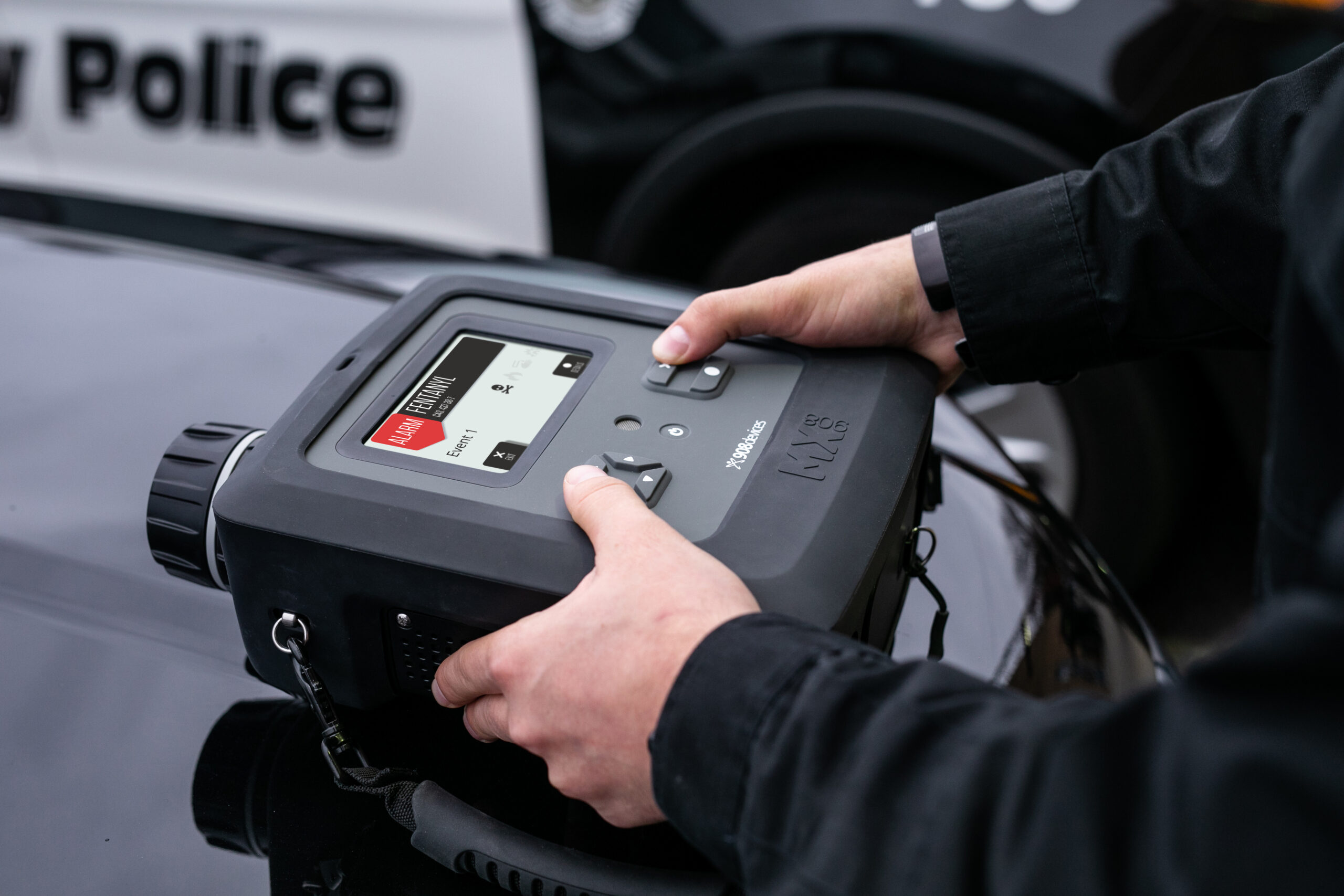
A prime example is the MX908, a multi-mission handheld mass spectrometer that has become a vital asset for first responders. This device leverages High-Pressure Mass Spectrometry (HPMS) to provide rapid, on-the-spot analysis of trace amounts of substances. Unlike other technologies that may struggle with heavily cut or mixed substances, the MX908’s advanced capabilities allow it to detect and identify a wide range of priority drugs, including fentanyl and over 2,000 of its analogs.
This is particularly critical for officer safety, as it allows them to identify a threat from a safe distance by analyzing residue on the outside of a package, minimizing direct exposure to potentially lethal substances. With devices like the MX908 at the forefront, the innovation of reliable drug detection solutions will continue to empower first responders and enhance community safety.