
Pharmaceutical-based Agents (PBAs) Are a WMD Threat
Aerosolized PBA detection is critical to address WMD threats posed by synthetic opioids. Learn why proven COTS technologies are essential.
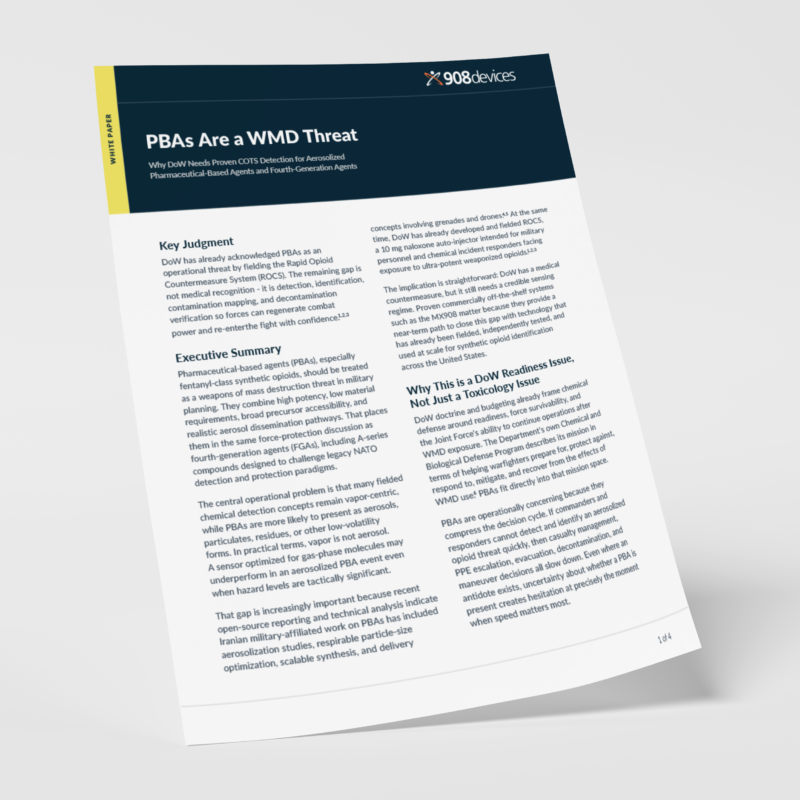
This white paper examines the growing threat of pharmaceutical-based agents (PBAs), particularly aerosolized synthetic opioids like fentanyl, as a credible weapons of mass destruction (WMD) risk. It highlights a critical operational gap in current defense capabilities: while the Department of Defense (DoD) has fielded medical countermeasures such as the Rapid Opioid Countermeasure System (ROCS), it lacks effective detection and identification systems for aerosolized threats.
The paper emphasizes that traditional vapor-centric detection technologies are insufficient for PBAs, which often exist as aerosols, particulates, or residues. It outlines how adversaries are actively exploring aerosol dissemination methods, increasing the urgency for phase-aware detection solutions. Proven commercially available technologies, such as MX908 handheld mass spectrometry, are positioned as immediate, viable solutions to enable detection, contamination mapping, and safe re-entry operations—ultimately supporting force protection and combat power regeneration.
Subscribe to Our Communications
Signup to receive new product updates, technical tips and more.