Narcotics Interdiction to WMD Defense
This white paper covers an overview of how the 2025 fentanyl WMD designation and the closure of the de minimis loophole transform narcotics enforcement, requiring advanced detection capabilities and new national security–aligned operational standards.
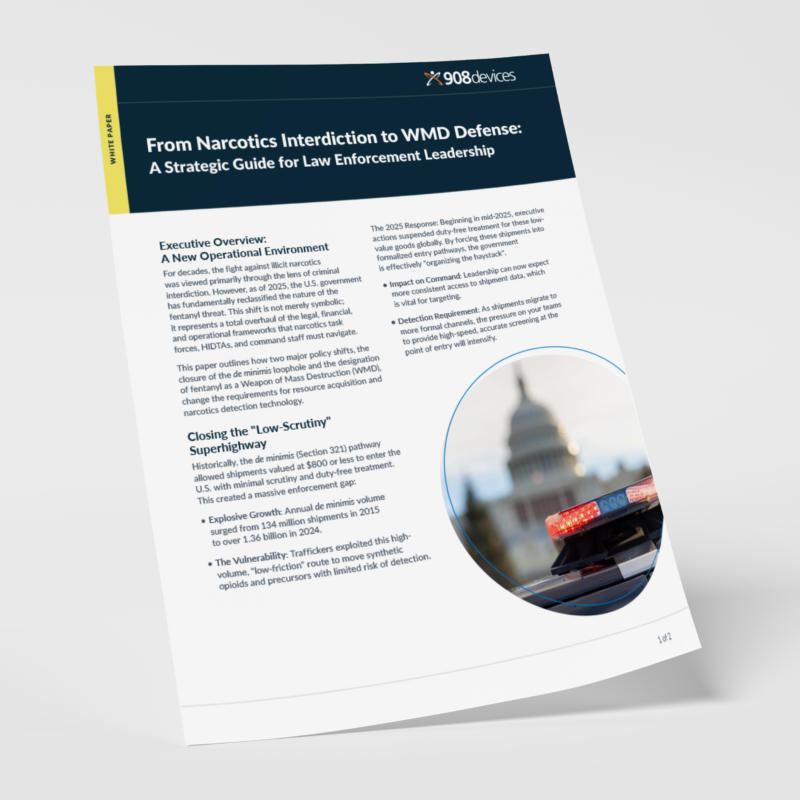
By 2025, the U.S. government fundamentally redefined the fentanyl crisis as a national security threat, reshaping how narcotics task forces operate. The closure of the de minimis loophole forces high‑volume, low‑value shipments into formal entry channels, increasing visibility but also requiring faster, more accurate detection technology. At the same time, the designation of fentanyl and its precursors as Weapons of Mass Destruction (WMD) shifts drug enforcement toward an intelligence‑driven, nonproliferation mission, granting expanded authorities and emphasizing precursor interdiction. Together, these changes demand that agencies justify 2026 equipment upgrades as WMD‑level detection tools with chemical specificity, operational scalability, and robust data integration to meet new DHS, DOJ, and national security requirements.
Subscribe to Our Communications
Signup to receive new product updates, technical tips and more.