
Colorado Moved First. It Will Not Move Alone.
When Colorado enacted HB 26-1020 in March 2026, banning custodial arrests based solely on colorimetric field drug tests, the reaction from law enforcement administrators in other states was predictable. Many recognized the scientific and legal logic immediately. Others began asking the question that defines the strategic challenge facing agencies across the country: is our state next?
Based on the current legislative landscape, the honest answer for many agencies is yes. Active legislation or reform discussions are underway in California, New York, New Jersey, Illinois, Massachusetts, Oregon, and Washington. The legal arguments have been validated. The research foundation has been established. The political path to enactment has been demonstrated by Colorado’s unanimous vote. What remains is the pace of movement — and that is accelerating.
Active legislation or reform discussions are underway in seven additional states. The question for most agencies is not whether their state will act, but when.
The State-by-State Picture
| State | Status as of 2026 |
|---|---|
| Colorado | ENACTED — HB 26-1020 signed March 27, 2026. Bans custodial arrest for low-level possession based solely on colorimetric tests. Unanimous vote. |
| California | Active reform discussions. Advocacy coalition active. Legislative momentum supported by documented wrongful conviction cases. |
| New York | Active legislative discussions. Prior court decisions have challenged colorimetric test admissibility. Reform bill framework in development. |
| New Jersey | Active discussions. State legislature has shown interest in criminal justice reform; colorimetric test restrictions part of broader agenda. |
| Illinois | Reform discussions underway. Cook County public defender experience with false positive cases driving legislative interest. |
| Massachusetts | Active legislative discussions. Progressive criminal justice reform environment supports near-term action. |
| Oregon | Reform discussions active. Prior statewide drug policy changes create favorable environment for colorimetric test restrictions. |
| Washington | Seattle Police Department has already prohibited colorimetric test use internally. State legislation expected to follow. |
Why the Pace Is Accelerating
Three factors are driving the acceleration of colorimetric test reform legislation across the country.
First, the research record is now unambiguous. The Quattrone Center’s documentation of approximately 30,000 wrongful arrests per year from colorimetric test false positives is the most comprehensive analysis of this problem to date. False positive rates ranging from 15% to over 91% give legislators clear empirical grounds for action. The research cannot be dismissed as advocacy — it is peer-reviewed, independently conducted, and citable.
Second, Colorado demonstrated that this is politically viable. A unanimous vote in a divided political environment sends a signal that reform opponents cannot easily characterize this as a partisan issue. The science speaks across party lines when the consequences — wrongful arrest of innocent people — are this clearly documented.
Third, enforcement agencies in several states have begun restricting their own use of colorimetric tests ahead of legislation. Seattle’s internal prohibition is one example. When agencies that have examined the record closely enough have already changed their own practices, legislative action becomes a matter of codifying what responsible enforcement already looks like.
What Proactive Adoption Means for Your Agency
Agencies that begin evaluating and procuring scientifically validated field identification instruments now — before their state’s legislation takes effect — gain advantages that agencies waiting for compliance deadlines will not have.
First, procurement takes time. Law enforcement technology acquisition cycles, grant applications, and budget processes typically span six to eighteen months. An agency that begins the process when legislation is introduced rather than enacted will have its new instruments in place before the mandate takes effect.
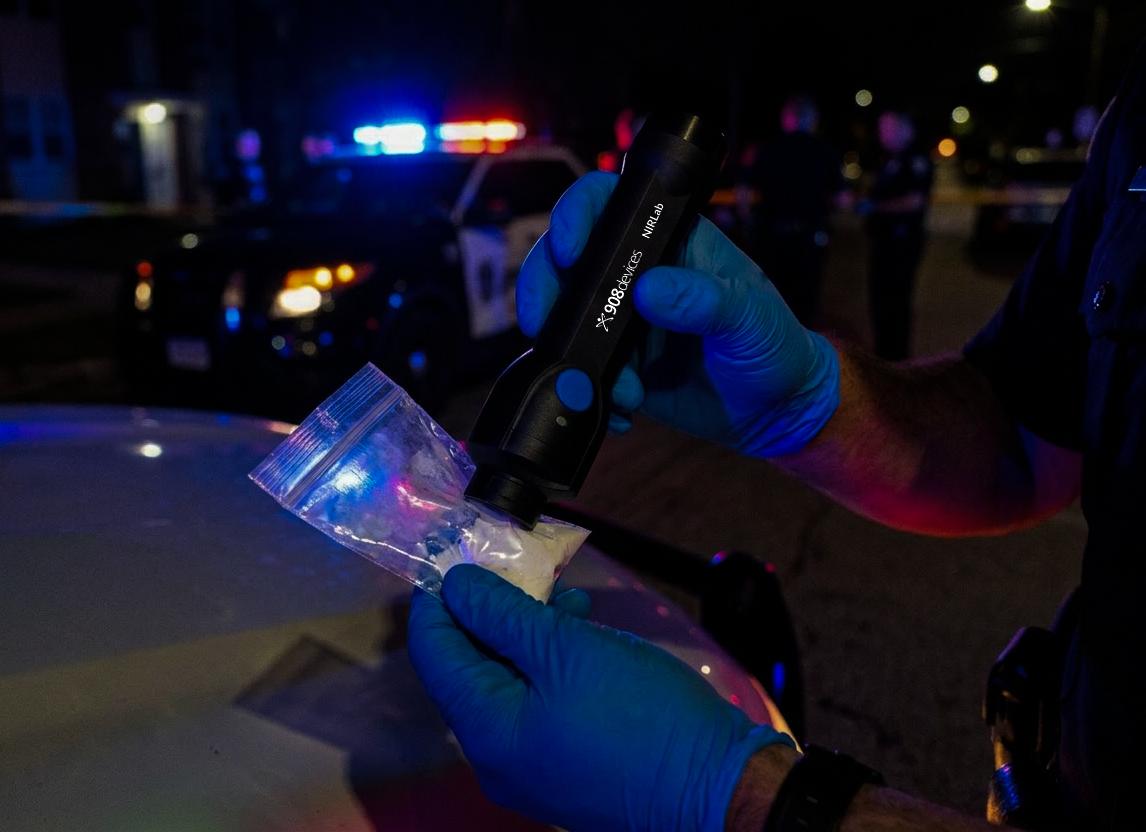
Second, field capability goes beyond compliance. NIRLab identifies all major street drugs officers encounter and adds purity and quantification data that colorimetric tests never provided. The compliance driver is a reason to start the evaluation process. The capability advantage is a reason to stay.
Third, early adopters shape regional practice. Agencies that move first on this transition become the reference points for neighboring departments, regional task forces, and state law enforcement associations. Leadership in technology adoption has value beyond the individual department.
The NIRLab Readiness Path
NIRLab is designed to serve as a direct field replacement for colorimetric testing workflows. It requires no sample preparation. Officers do not handle the substance. The scan takes seconds. Results are automatically uploaded to the NIRWeb cloud platform and generate a warrant-ready report that documents the identification, the purity data, the GPS location of the scan, and the chain of custody information.
Applicable grant funding — JAG, Byrne, and HIDTA program funds where applicable — can support acquisition. The 908 Devices inside sales team provides grant guidance as part of the evaluation and procurement process.
The legislative tracker reflects the current status of colorimetric test reform across the eight states with active activity. It will be updated as legislation advances. Agencies in any of these states that want to understand what the transition looks like operationally are encouraged to request a compliance briefing. For Colorado agencies, NIRLab is the field-ready replacement the new law requires. For agencies in pending-legislation states, it is the investment that converts a future compliance problem into a capability advantage — today.