UNODC Synthetic Opioid Guidance Meets Real-world Technology and Intelligence Workflows
The global synthetic opioid crisis continues to evolve at a pace that challenges traditional forensic and public-health systems. In their 2025 scientific guidance, the United Nations Office on Drugs and Crime (UNODC) underscores a critical reality: fentanyl analogs and other synthetic opioids at trace amounts can have life-threatening consequences, and new variants emerge faster than conventional laboratory methods can keep up.
In our recent webinar, “From Emergence to Response: Mapping Substance Trends Across Intelligence Streams,” subject-matter experts and frontline practitioners shared how integrated intelligence, real-time analytics, and advanced field detection technologies empower agencies to stay ahead of the curve. Drawing on insights from that discussion and the UNODC report, this post explores why rapid, field-capable synthetic opioid detection is essential and how advanced chemical detection tools fit into a modern, intelligence-led response model.

Why Synthetic Opioids Demand a New Detection Model
According to UNODC’s ST/NAR/58: Assessment of the Abuse and Dependence Potential of New Psychoactive Substances: Synthetic Opioids, modern synthetic opioids such as fentanyl analogs and nitazenes are:
- Extremely potent at trace levels (trace = parts per million levels)
- Often undetectable by bulk-only methods (bulk = >5% by mixture)
- Rapidly evolving analogs appear faster than legislation and lab workflows can respond
- High-risk for public health and enforcement, driving overdose deaths and complicating casework
This landscape makes early, accurate identification in the field mission critical not just in the laboratory. The recent 908 Devices webinar reinforced these themes while adding an operational lens. Intelligence streams including forensic data, field detection results, epidemiological trends, and supply chain insights must be mapped and integrated for effective response.
In other words, detection technologies are no longer the tools of last resort: they are active and functional contributors to intelligence fusion and strategic decision-making.
Putting Intelligence into Action
For substances that are lethal at nanogram levels, traditional bulk analysis is often insufficient. Enter the MX908 a handheld high-pressure mass spectrometer designed for trace-level detection in real-world environments.
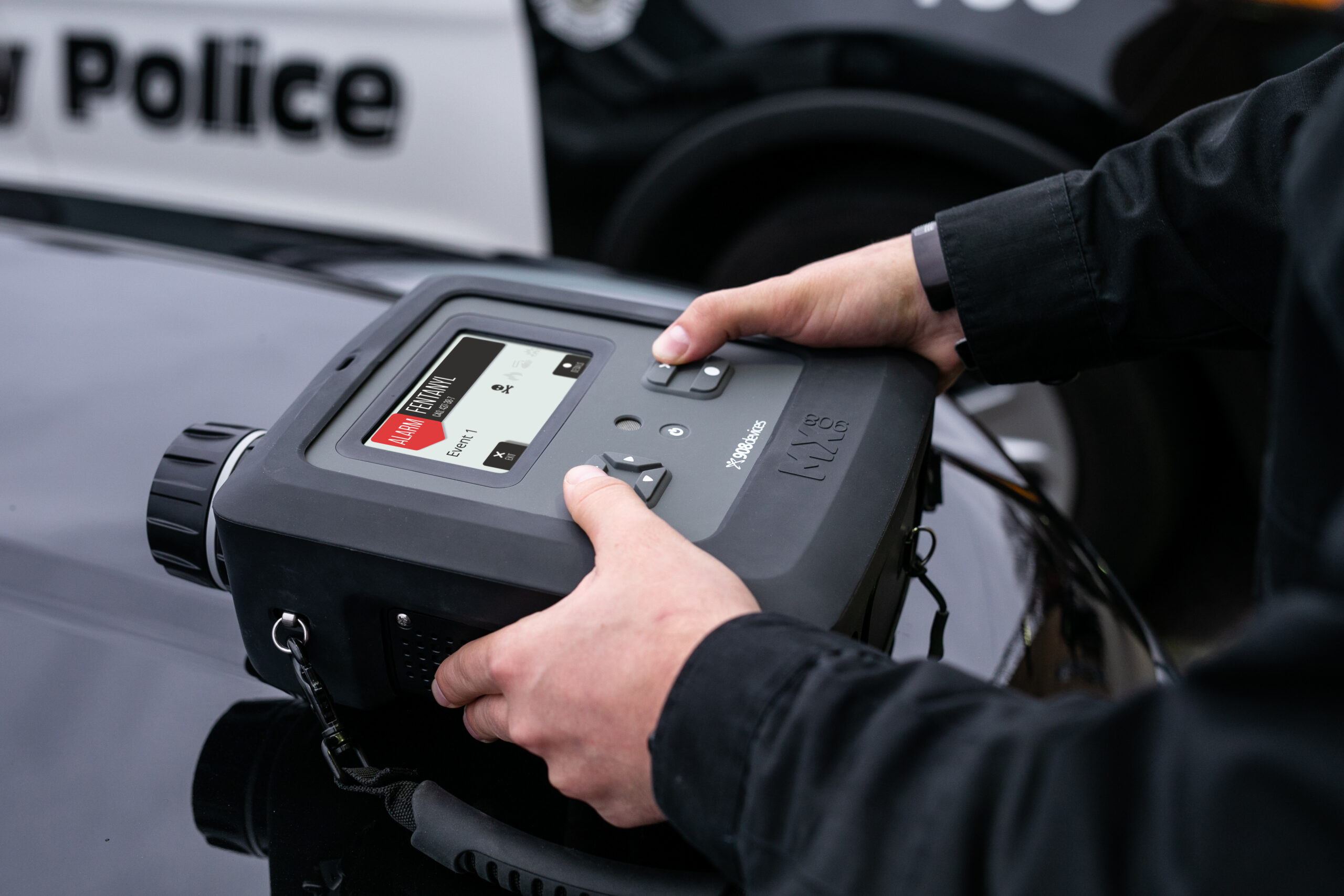
What MX908 brings to the table:
- Trace sensitivity: Detects ultra-low concentrations of synthetic opioids and their analogs on surfaces, residues, and environmental swabs.
- Rapid results: Provides actionable output in seconds, supporting immediate tactical decisions.
- Automated interpretation: Built-in spectral libraries and predictive analytics reduce ambiguity, enabling responders to make confident identifications without waiting for lab confirmatory testing.
The UNODC report, as well as our webinar, emphasized that speed and confidence of identification drive better outcomes, including everything from overdose prevention to criminal investigations and policy decisions. The MX908’s real-time chemical intelligence is now an essential input to that broader decision-making ecosystem.
Precursor Bulk Identification
While trace detection is critical for early warning, end product analysis and seizures, many seizures, upstream field encounters still involve bulk precursors in raw or semi-finished mixtures. The VipIR system fills this role by combining FTIR and Raman spectroscopy to deliver rapid, non-destructive bulk precursor analysis.
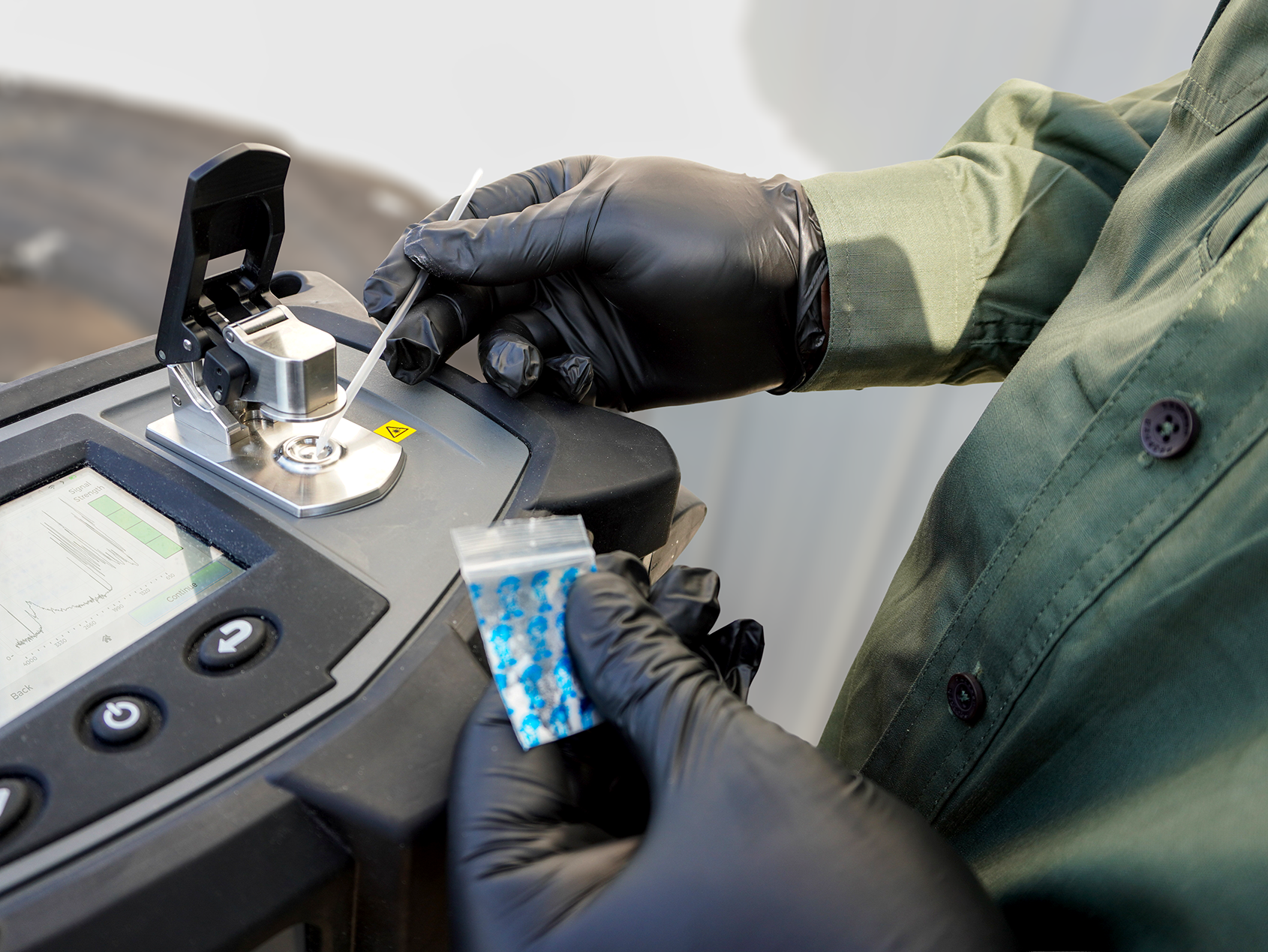
VipIR’s strengths in the synthetic opioid context:
- SmartID 3:1 spectroscopy technique: Raman, FTIR, and Smart Spectral Processing together increase confidence in identification across a broader range of substances.
- 39,000 standardized libraries entries: Extensive spectral libraries ensure consistent, reproducible identification that aligns with forensic expectations.
- Minimal sample preparation: Enables rapid confirmation without the delays associated with laboratory processing.
In the webinar, we emphasized that complementary tools are essential, and no single technique can address every facet of synthetic opioid detection. VipIR’s bulk capabilities neatly bridge the gap between highly targeted trace detection of finished product and the precursors used to make those products.
A Tiered, Intelligence-driven Detection Strategy
One of the key takeaways from our webinar was the importance of treating detection as part of a broader intelligence and response pipeline, not just as an isolated task. This means:
- Acquire real-time field data with trace and bulk detectors
- Integrate that data with other intelligence streams (e.g., public health, forensic labs, supply chain mapping)
- Generate actionable insights for operations, policy, and prevention
- Feed results back into strategic planning and trend assessment
This model mirrors how UNODC envisions modern synthetic opioid monitoring: multi-disciplinary, fast, and driven by scientific evidence.
Supporting Public Safety and Law Enforcement Worldwide
The UNODC on synthetic opioids and 908 Devices’ technology suite converge on one principle: early, accurate identification saves lives and accelerates effective response.
By utilizing both the MX908 and VipIR, law enforcement agencies gain a tiered detection strategy that supports:
- Frontline responders
- Forensic laboratories
- Intelligence analysts
- Policy makers
In an era where synthetic opioids are a moving target, it’s not enough to react. Detection must be proactive, informed, and integrated and that is precisely what 908 Devices technologies enable.