
Key takeaway: Defense acquisition is placing greater emphasis on capabilities that can be demonstrated, integrated, supported, and fielded now. Rather than defaulting to a lengthy custom-development program, acquisition teams are expected to determine whether an existing commercial product can meet the operational requirement and then apply focused modification where needed. For aerosolized pharmaceutical-based agent detection, MX908 with Aero offers a fieldable platform that can be adapted to the mission without starting from zero.
The Procurement Shift Is Bigger Than Software
The U.S. Department of War is under sustained pressure to deliver operational capability faster. This requires more than shortening individual acquisition steps, it requires changing the starting point. Instead of assuming that each mission requirement demands a new development program, acquisition teams are increasingly looking first at what already exists in the commercial market. The operating logic is straightforward: identify a proven capability, evaluate it against the mission, make bounded modifications where necessary, and move toward deployment.
This direction is not limited to emerging software companies or experimental innovation programs. Federal acquisition policy requires agencies to conduct market research to determine whether commercial products or nondevelopmental items can meet their requirements, and to acquire those solutions when they are available. Federal Acquisition Regulation Part 12 is specifically designed to streamline commercial acquisition and align government buying more closely with commercial-market practices. The Department’s use of Commercial Solutions Openings and Other Transaction authority reinforces the same principle: begin with commercially developed capability and create a faster path through prototyping and into production. The Defense Innovation Unit describes this model as a mechanism for moving commercial technology into operational use at greater speed and scale.
What COTS and Mission-Specific Modification Mean in Practice
A commercial-first mindset begins with a simple question: what proven capability can be deployed now? When an existing commercial product can satisfy the requirement, it may be acquired as commercially available off the shelf technology (COTS). The Federal Acquisition Regulation defines a COTS item as a commercial product sold in substantial quantities and offered to the government without modification in the same form in which it is sold commercially.
Not every defense requirement can be met without adaptation. A commercially based platform may require mission-specific configuration, integration, software, training, deployment concepts, or supporting infrastructure. However, that does not necessarily mean beginning a new system-development program. It means starting with a proven commercial foundation and limiting engineering activity to the elements required to close the operational gap. This distinction is important. The acquisition team is not funding the invention of an entirely new platform, it is adapting an existing one to meet a defined mission requirement.
Why Chemical Detection Fits This Model
Field chemical detection is a strong candidate for commercial-first acquisition because the operational need is immediate and the underlying platform requirements are well understood.
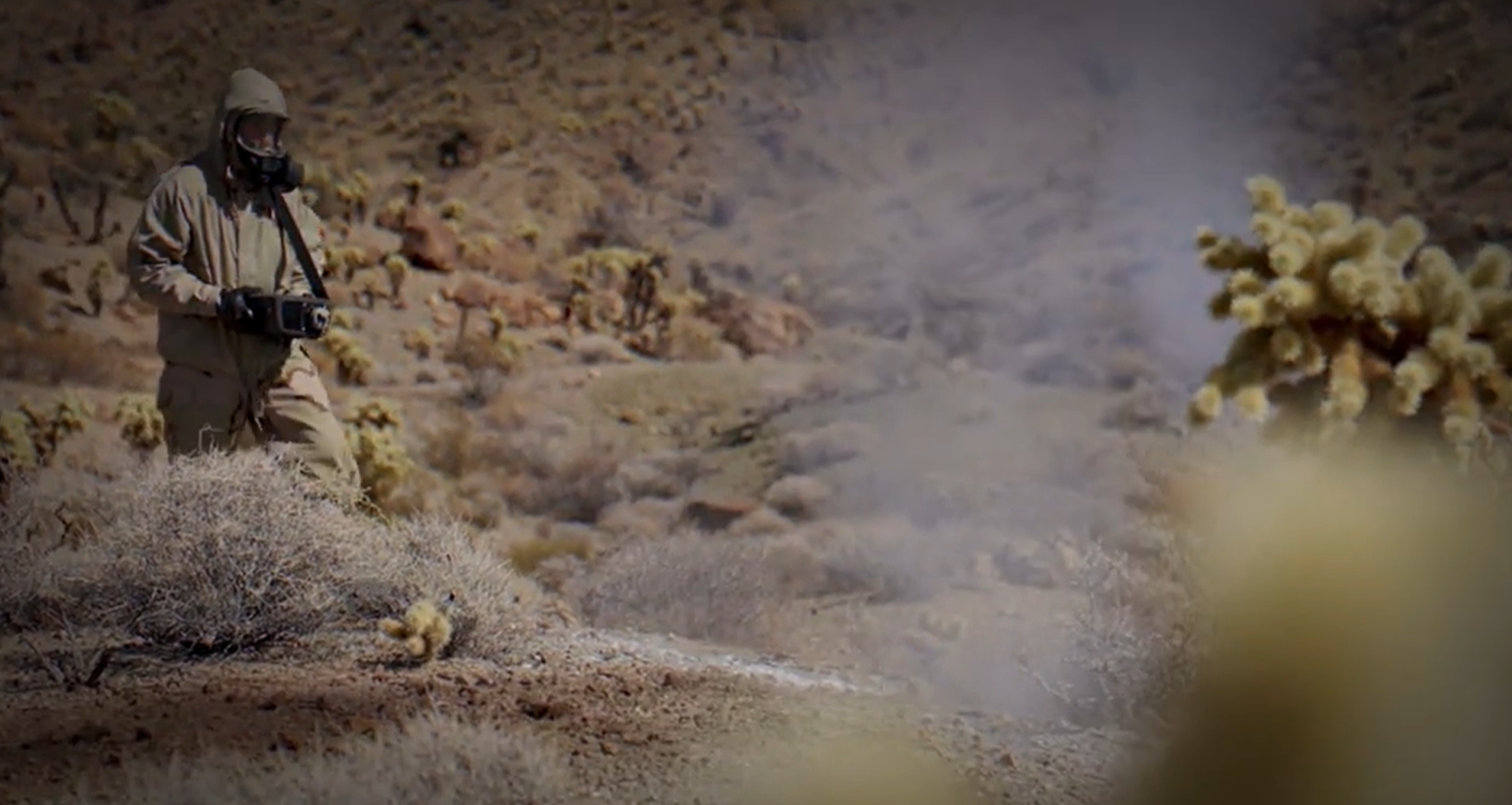
Teams need systems that can be trained, transported, supported, and deployed in real environments. They need detection and identification capabilities that produce actionable information at the point of need, not after a prolonged custom-development cycle. Commercial platforms also provide an existing base for:
- Operator training
- Logistics and sustainment
- Software and library management
- Technical support
- Deployment procedures
- Future capability extensions
The objective should be to preserve what already works while adapting only what the mission requires.
FAR Part 12 also provides specific flexibility for supplies and services used in defense against or recovery from chemical, biological, radiological, nuclear, and cyber threats. Under designated circumstances, agencies may treat those acquisitions as commercial-product or commercial-service procurements.
The Aerosolized PBA Gap Requires More Than a Conventional Detector
Aerosolized pharmaceutical-based agents create a difficult operational problem. Identifying a bulk chemical sample is not the same as identifying an airborne threat. Aerosols present different collection and analysis challenges than vapors, liquids, or materials collected for later testing.
Aerosolized particles can be dispersed across an environment, deposited on surfaces, or encountered at concentrations that require effective collection before identification. Therefore, operational teams need more than a warning that an unidentified substance may be present. They need enough chemical information to support protective actions, scene management, decontamination decisions, and follow-on response.
Many legacy field-detection approaches were designed primarily around vapor detection or discrete sample analysis. Extending detection into aerosolized threats requires a capability to collect particulate material and generate a chemical identification from that collected sample. That is the mission gap addressed by MX908 with Aero.
Why MX908 with Aero Fits the Commercial-First Model
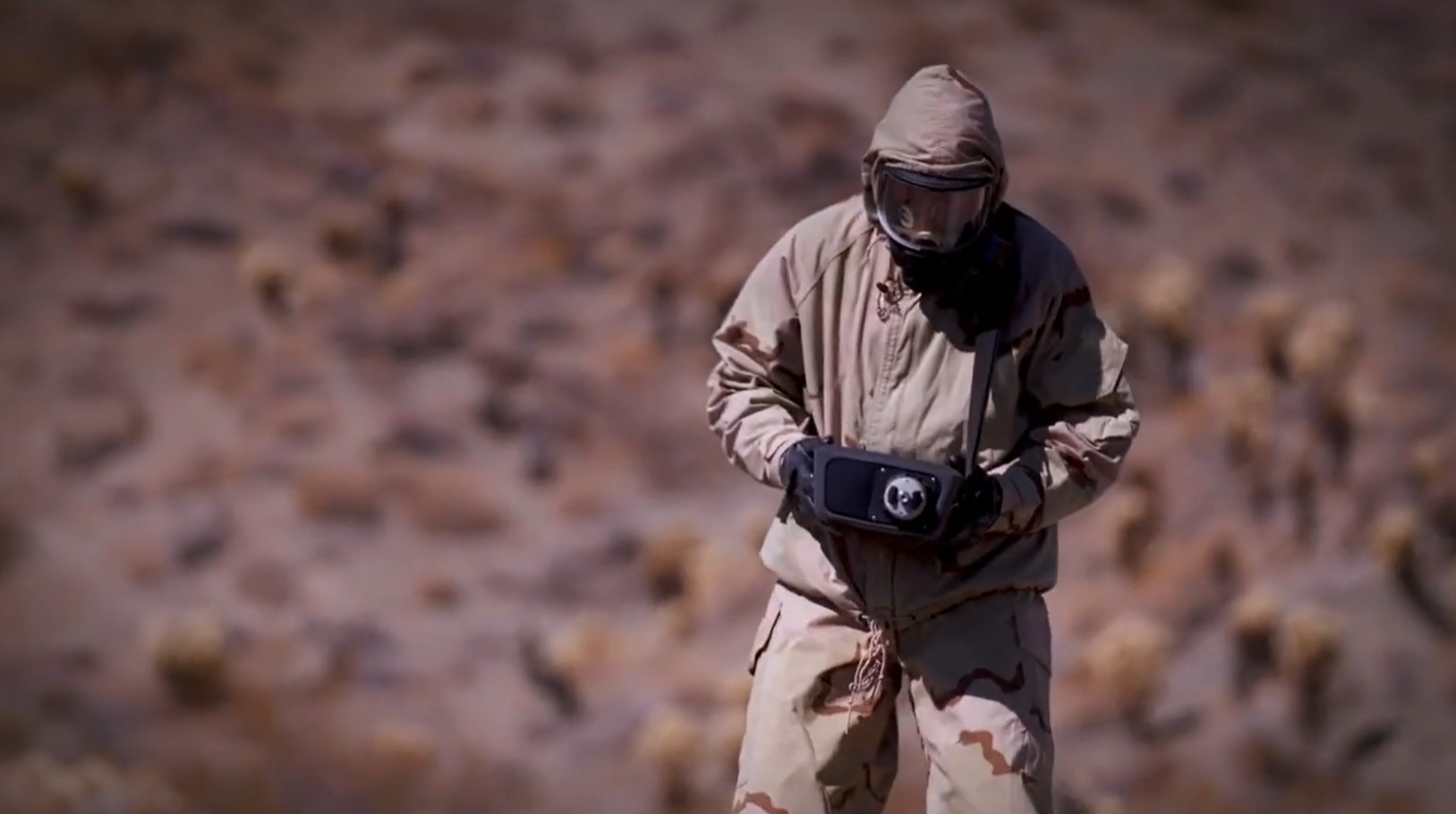
MX908 with Aero provides defense buyers with a different starting point: an existing field-deployable platform rather than a requirement for a new detector-development program. The MX908 platform is already commercialized, supported, and designed for field chemical identification. The MX908 with Aero accessory extends that platform into aerosol collection and identification through a defined mission-specific configuration. This matters from an acquisition perspective.
Defense buyers will still need to define requirements, establish test criteria, validate performance, address integration, train operators, plan sustainment, and determine the appropriate contracting path. The advantage is that those activities begin with a working capability. That gives acquisition teams an opportunity to evaluate the system against real operational use cases earlier in the process. It also creates a clearer separation between what already exists and what must be adapted.
For MX908 with Aero, the procurement story is:
1. Start with an established commercial chemical identification platform
2. Extend the platform through a defined aerosol collection capability
3. Validate performance against the operational requirement
4. Address mission-specific integration, training, and deployment needs
5. Move toward fielding without creating an entirely new development program
This approach is consistent with the broader federal preference for acquiring commercial products and nondevelopmental items when they are available to meet agency needs.
What Defense Buyers Should Conclude
When a fieldable commercial platform can address an operational gap, the acquisition question changes. The question is no longer: who can design a future system? Instead, it becomes: what capability already exists, how quickly can it be validated, and what focused adaptation is required to deploy it for the mission?
That framing places more weight on operational readiness, supportability, integration, and time to field—and less on open-ended development. For aerosolized PBA detection, MX908 with Aero offers a commercially based path from requirement to evaluation and deployment. It gives defense buyers an existing platform to assess rather than a development concept to fund.
Conclusion
As defense acquisition timelines compress, buyers will face increasing pressure to explain why a requirement demands a new development program when a fieldable commercial capability already exists. Commercial-first does not mean accepting a product without mission validation. It means starting from proven capability, preserving mature technology, and limiting modification to what is operationally necessary.
MX908 with Aero aligns with that buying logic. It starts with an established commercial platform, adds a focused capability for aerosolized threat detection, and gives acquisition teams a more direct route from documented operational gap to fielded capability.
See how MX908 with Aero helps defense and response teams detect and identify aerosolized pharmaceutical-based agents and chemical threats. Contact 908 Devices to schedule a mission-focused capability review.
Supporting References
- Federal Acquisition Regulation, Part 12 — Acquisition of Commercial Products and Commercial Services
- Federal Acquisition Regulation, 12.103 — Commercially Available Off-the-Shelf Items
- Defense Innovation Unit — Advancing DoD Operational Capabilities with Software Acquisition Reform
- 908 Devices — Aerosol Detection and Identification with MX908