The Research That Changed the Debate
When the Quattrone Center for the Fair Administration of Justice at Penn Carey Law School published its analysis of colorimetric presumptive drug tests, it did not introduce a new argument. It quantified one that had been building in courtrooms and civil rights organizations for years. The findings were stark: approximately 30,000 people are wrongfully arrested in the United States every year because of false positive results from colorimetric field drug tests.
That number — 30,000 per year — is derived from documented wrongful arrest data and known false positive rates from law enforcement and corrections agencies across the United States. It represents real people: held in custody, charged with drug offenses, subjected to the full weight of the criminal justice system — based on a chemical color change that should never have been treated as scientific evidence.
30,000 wrongful arrests per year. Documented outcomes from false positives that should never have been treated as evidence.
The Legal Consequences Are Now Catching Up
For most of the past several decades, the legal framework around field drug tests was unclear enough that agencies could operate in the gap between scientific reality and legal standard. That gap is closing. Colorado’s unanimous passage of HB 26-1020 is the most significant legislative marker to date, but it follows a trajectory that includes court decisions, civil litigation, and department policy changes across multiple states.
The Quattrone Center’s research provided the empirical foundation that legislators, courts, and advocacy organizations have been citing to support reform. The Roadside Drug Test Innocence Alliance has documented cases of wrongful conviction and incarceration from colorimetric test errors. Class action litigation against test manufacturers and law enforcement agencies has generated settlements and policy changes.
The legal environment surrounding colorimetric tests has shifted from uncertain to actively hostile. Agencies that continue to rely on these tests as a primary identification tool are carrying legal and financial risk that is measurable and growing.
What Good Science Looks Like in a Field Drug Identification Context
The standard that separates defensible field identification from probable cause risk is not difficult to define. A scientifically valid field drug identification instrument should produce results based on the actual spectroscopic signature of the substance being tested, not a color change triggered by reagent chemistry. It should maintain a validated drug library built from reference standards that have been confirmed by an accredited laboratory. It should generate a chain of custody record that can be reviewed, audited, and presented in court.
Near-infrared spectroscopy, the technology which the NIRLab device is built on, meets all of those criteria. NIRLab’s identification is based on the molecular spectroscopic signature of the substance itself. The drug library is validated against more than 40,000 GC-MS quantified reference compounds by an ISO 17025 accredited laboratory. Every scan produces a cloud-connected warrant-ready report through the NIRWeb platform. The entire identification process — from scan to report — requires no contact with the substance and no sample preparation.
This is what the science that protects both officers and the people they encounter looks like—and it is available now.
NIRLab’s drug library is validated against more than 40,000 GC-MS quantified reference compounds by an ISO 17025 accredited laboratory.
What Law Enforcement Leaders Should Take From the Quattrone Findings
The practical takeaway from the Quattrone research is not just about individual wrongful arrests. It is about systemic risk. Every arrest made on the basis of a colorimetric test result is an arrest that could be challenged, litigated, and potentially converted into civil liability for the department and the agency. Every case built on a colorimetric test result is a case that opposing counsel will examine for exactly the vulnerabilities the Quattrone Center documented.
The agencies that are best positioned going forward are those that have moved to scientifically validated identification instruments before the legal pressure forces the transition. The Quattrone data did not create this problem. It described a problem that has been building since colorimetric tests were first introduced as a law enforcement tool. The question for agency leaders today is straightforward: how much longer does it make operational and legal sense to rely on technology the research has already condemned?
What the Research Actually Found
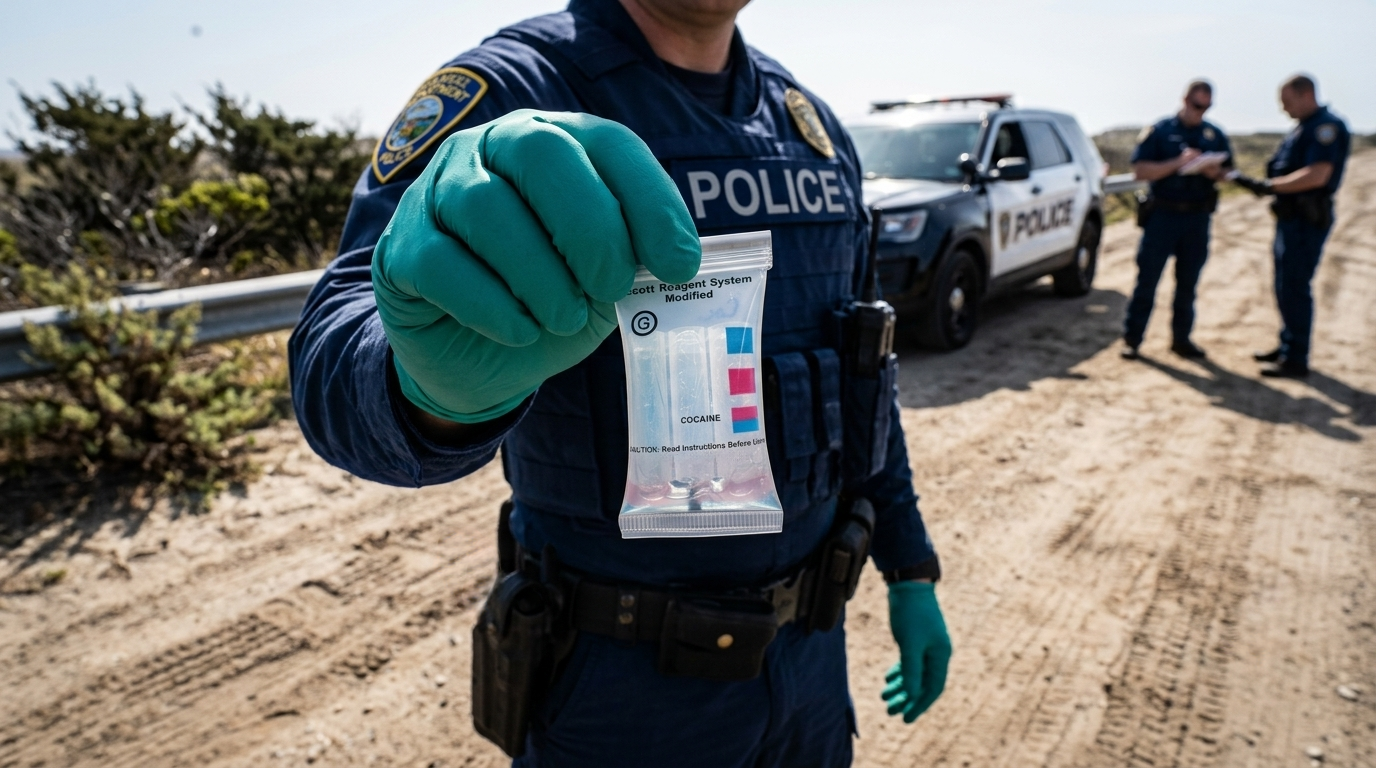
The Quattrone Center analyzed US drug arrest data from 2010 to 2019. During that decade, approximately 1.5 million drug arrests occurred annually. Roughly half involved colorimetric presumptive field tests as part of the basis for arrest.
The false positive rates the Center documented ranged from 15% on the low end to more than 91% in some documented agency and corrections contexts. The variance reflects the reality that different colorimetric test kits react differently to different substances, and that field conditions — temperature, humidity, officer technique, contamination — affect results in ways the tests were not designed to account for.
Among the substances known to trigger false positives in colorimetric tests: vitamin C, aspirin, chocolate, motor oil, and numerous legal medications. The chemistry is not selective enough to distinguish between a controlled substance and a structurally similar legal compound. Courts that have examined this record have increasingly concluded that colorimetric tests cannot support probable cause on their own.
Read the full Quattrone Center Research Summary
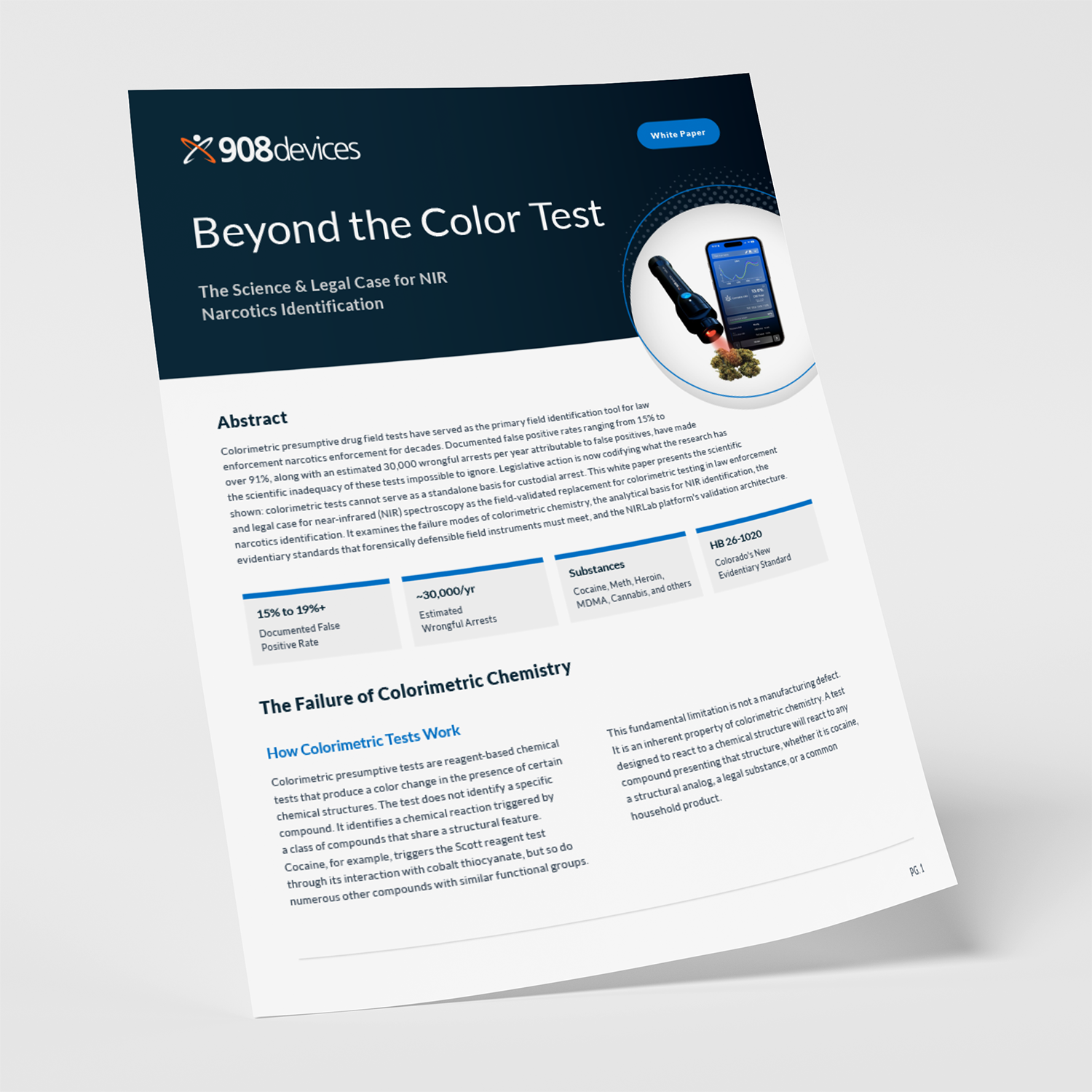
Learn how NIRLab’s approach eliminates the false positive vulnerabilities that have resulted in tens of thousands of wrongful arrests by downloading the White Paper: Beyond the Color Test – The Science and Legal Case for NIR Narcotics Identification.