
A recent public alert from the Center for Forensic Science Research & Education (CFSRE)1 highlights a troubling surge in synthetic cannabinoid detections linked to fatal overdoses among inmates. At the same time, national reporting has brought broader attention to how these substances are being smuggled in new and highly deceptive ways—particularly on everyday materials like paper.
The alert notes that 80% of tested fatal overdose cases contained the primary metabolite of 5F-ADB, with MDMB-4en-PINACA metabolites present in 31% of cases. Synthetic cannabinoids are often smuggled in on everyday paper items—letters, greeting cards, magazines—making them difficult to detect until it’s too late.
A Rapidly Evolving Threat
Synthetic cannabinoids are not new—but their delivery methods are evolving fast.
Unlike traditional drugs, these compounds are often sprayed onto paper mail. Once inside a facility, they can be easily distributed, consumed discreetly, and difficult to trace. This creates a perfect storm:
- High potency and unpredictable effects
- Difficult visual detection
- Increased risk of overdose and medical emergencies
- Heightened danger for correctional staff handling contaminated materials
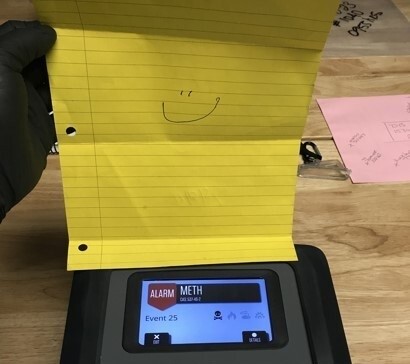
A recent New York Times investigative report into overdose deaths at the Cook County jail in Chicago noted that a whole sheet of drug-soaked paper can go for as much as $10,0002.
For correctional administrators, this isn’t just an inmate health issue—it’s an operational and officer safety crisis.
A New Approach to On-Site Drug Detection
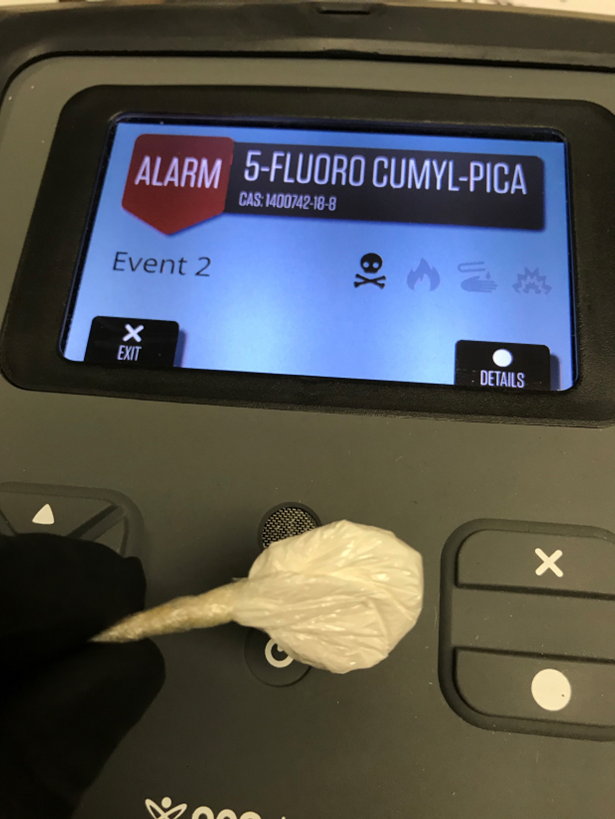
This is where advanced tools like the MX908 are changing the equation.
The MX908 is a portable mass spectrometry device designed for rapid, on-site trace-level chemical identification. For correctional environments, that means:
- Detection of synthetic cannabinoids directly from surfaces and materials
- Minimal sample handling, reducing officer exposure risk
- Results in seconds, enabling immediate action
- Broad detection capabilities for emerging and evolving compounds and confirmation from 908 Devices’ Reachback forensic chemists 24/7/365
Instead of relying on suspicion or delayed lab results, officers can make informed decisions in real time—whether screening mail, investigating suspected contraband, or responding to an incident.
Protecting Officers and Inmates Alike
The implications go beyond detection. By identifying synthetic cannabinoids at the point of entry, facilities can:
- Prevent distribution within the inmate population
- Reduce overdose incidents and medical emergencies
- Protect staff from accidental exposure
- Strengthen overall facility security and control
In an environment where one contaminated sheet of paper can impact dozens of individuals, early detection is critical.
Promoting Prison Contraband is a Crime
When a material is introduced into a prison facility, it represents threats to the staff, inmates, and visitors. Immediate threat identification is paramount to identifying the threat, and holding people accountable to prevent future, similar acts.
- Some states have enacted laws, Virginia, as an example, where the Department of Forensic Science certified and approved the MX908 handheld mass spectrometer as a presumptive mobile instrument for the detection of drugs3.
- This type of law and certification
Moving Forward
The rise in synthetic cannabinoid-related fatalities is a clear signal: correctional facilities need tools that match the sophistication of today’s drug threats.
Staying ahead requires more than awareness—it requires defensible actions.
Technologies like the MX908 provide a proactive approach, giving correctional teams the ability to detect, respond, protect, and arrest with confidence.