
The Impact of Drug Case Delays on Officer Morale
Drug case delays from overwhelmed forensic labs slow investigations and negatively impact officer morale, leaving officers frustrated as suspects often return to the community before results are available.
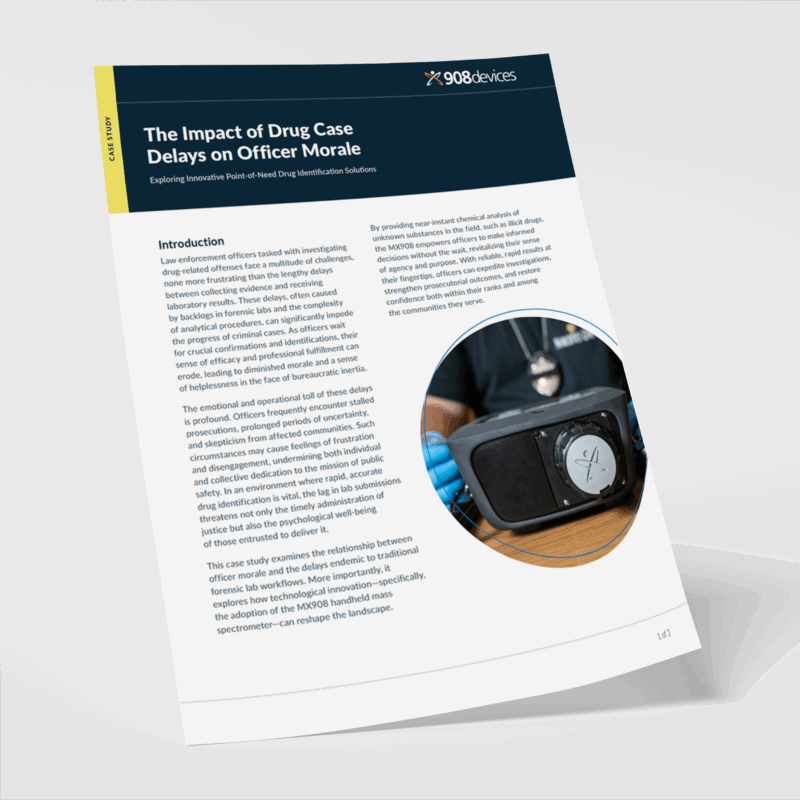
This case study examines how backlogs in forensic labs delay drug cases and directly impact officer morale. These delays slow investigations, frustrate officers who feel unable to act, and allow suspects to return to the community while waiting for lab results.
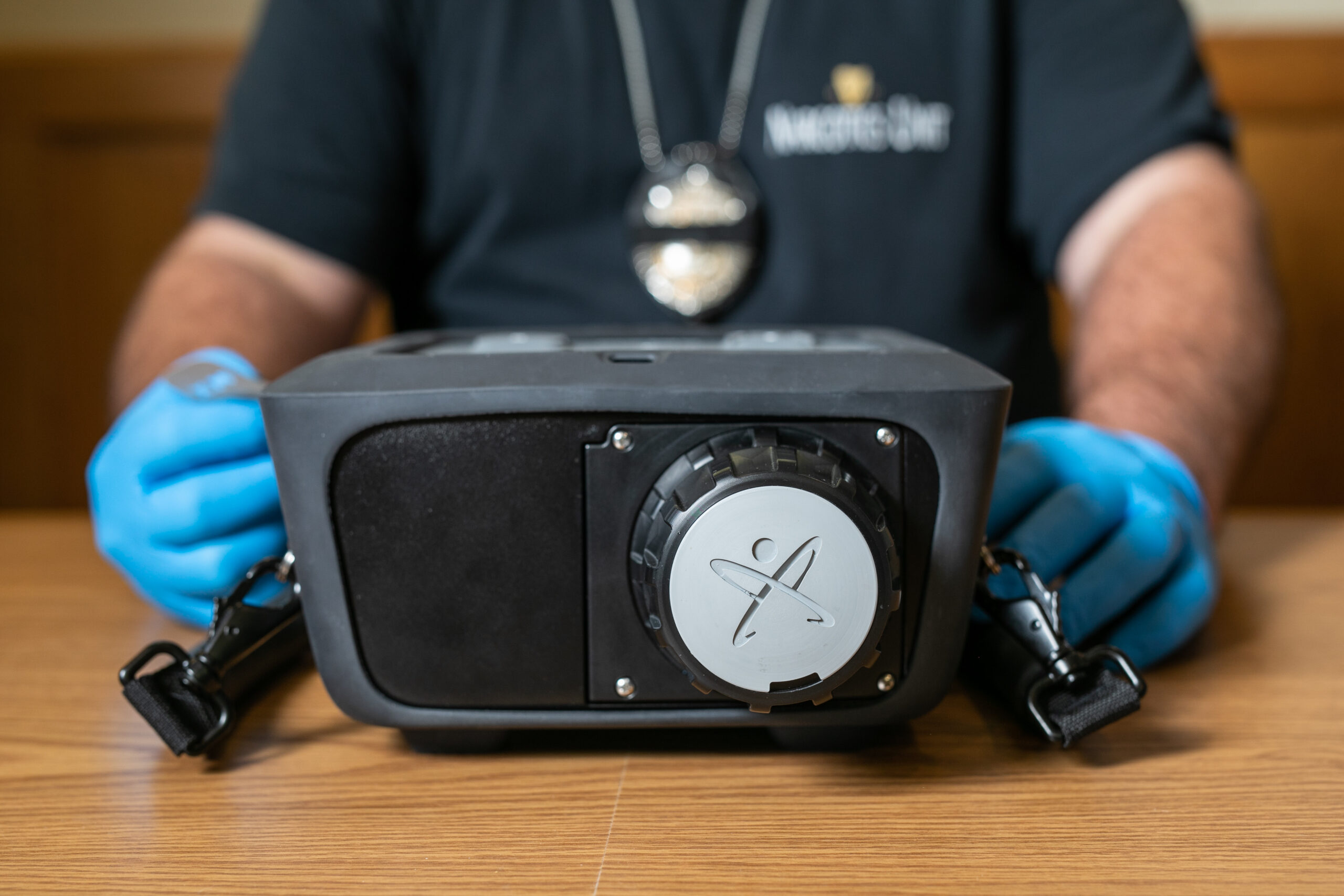
Ohio is leading a proactive effort to solve this challenge through a statewide pilot program deploying the MX908 handheld mass spectrometer. Over two years, 388 officers across 153 agencies have been trained to use the device for rapid drug identification. With real-time field results, officers can make informed decisions faster, accelerate case processing, and reduce reliance on delayed lab confirmations.
The Greene County Sheriff’s Office provides a standout example of success. Sheriff Scott Anger describes how the MX908 has boosted efficiency, strengthened prosecutorial outcomes, and dramatically improved morale. Officers now see immediate results for their work, feel empowered, and experience renewed pride in their profession—marking a major shift in how agencies can combat drug crime and support frontline personnel.
The Impact of Drug Case Delays on Officer Morale
Exploring Innovative Point-of-Need Drug Identification Solutions
Introduction
Law enforcement officers tasked with investigating drug-related offenses face a multitude of challenges, none more frustrating than the lengthy delays between collecting evidence and receiving laboratory results. These delays, often caused by backlogs in forensic labs and the complexity of analytical procedures, can significantly impede the progress of criminal cases. As officers wait
for crucial confirmations and identifications, their sense of efficacy and professional fulfillment can erode, leading to diminished morale and a sense of helplessness in the face of bureaucratic inertia.
The emotional and operational toll of these delays is profound. Officers frequently encounter stalled prosecutions, prolonged periods of uncertainty, and skepticism from affected communities. Such circumstances may cause feelings of frustration and disengagement, undermining both individual and collective dedication to the mission of public safety. In an environment where rapid, accurate drug identification is vital, the lag in lab submissions
threatens not only the timely administration of justice but also the psychological well-being of those entrusted to deliver it.
This case study examines the relationship between officer morale and the delays endemic to traditional forensic lab workflows. More importantly, it explores how technological innovation—specifically,
the adoption of the MX908 handheld mass spectrometer—can reshape the landscape.
By providing near-instant chemical analysis of unknown substances in the field, such as illicit drugs, the MX908 empowers officers to make informed decisions without the wait, revitalizing their sense of agency and purpose. With reliable, rapid results at
their fingertips, officers can expedite investigations, strengthen prosecutorial outcomes, and restore confidence both within their ranks and among the communities they serve.
Ohio’s Leadership
The MX908 Pilot Program
Ohio stands at the forefront of pioneering solutions to the challenges posed by delayed drug case processing. Through a collaborative pilot program between the Ohio Bureau of Criminal Investigation (BCI) and 908 Devices, the state has embraced the MX908 as a critical tool for real-time drug identification. This initiative reflects Ohio’s commitment to both innovation and the well-being of its law enforcement community.
Over a 2-year period, the pilot program has resulted in the training of 388 law enforcement personnel, representing 153 agencies spread across 65 counties throughout Ohio. This expansive reach demonstrates the state’s dedication to equipping its officers with advanced technology and practical expertise, allowing them to respond more swiftly and confidently to drug related incidents. The widespread adoption of the MX908 not only streamlines investigative procedures but also addresses the morale challenges faced by officers, ensuring they feel supported and empowered in their roles.
Greene County Sheriff’s Office
Embracing Advanced Field Analysis
Among the agencies participating in the statewide pilot, the Greene County Sheriff’s Office stands out as an exemplar of how progressive law enforcement can harness technology to overcome longstanding operational barriers. The department’s commitment to innovation is reflected in its early adoption of the MX908 handheld mass spectrometer, a move driven by the urgent need for faster, more reliable drug identification in the field.
For Greene County deputies, the integration of the MX908 into routine operations has been transformative. Instead of waiting days—or even weeks—for laboratory confirmation, officers can now perform sophisticated analysis of suspicious substances within minutes at the scene. This immediacy enables deputies to make evidence-based decisions, expedite case processing, and reduce the uncertainty that once hampered investigations. As a result, the office has witnessed a marked improvement in operational efficiency and case resolution rates, fostering a renewed sense of purpose and professional pride among its personnel.
Equally important is the impact of this technology on officer morale. The ability to take decisive action, backed by real-time data, instills confidence and alleviates the frustration associated with delayed lab results. Greene County’s embrace of the MX908 signals a broader cultural shift—one in which law enforcement is empowered to confront the evolving challenges of drug enforcement with agility and assurance.
The experiences and perspectives of Sheriff Scott Anger, whose leadership has been instrumental in guiding the pilot’s implementation in Greene County, further illuminate the significance of this initiative. On the topic of how it affects officer morale to have cases stall while waiting for lab results to return, Sheriff Anger said. “They [the officers] put themselves in danger to make arrests, the way that things have been going recently is they have to arrest someone, they have to take care of the paperwork, and then they have to release them until they get drug test results back because we have to have drug results back in 10 days to go to grand jury. That has a real effect on them because they make a good arrest. They do everything they’re supposed to be doing, and then they have to watch the person leave. And then what they have to do many times is see that person continue to use and abuse or sell drugs up until possibly 6 months before they actually see anything happen with the case.”
When asked about how officers feel when they see suspects returning to the community before the case is resolved, Sheriff Anger responded “They feel like they’re doing their job but they just can’t get the job completed. They feel like that they’re letting down the people that they serve because the people that are potentially perpetrators and victimize people in society are still out walking around when they could be incarcerated and starting the rehabilitation process, or whatever happens after that, but there’s a delay where they have to sit and watch people continue to either be in crisis themselves or continue to cause crisis in the community.”
Sheriff Anger continued explaining why he wanted to bring the MX908 to the community that he serves. “Because we had the continual delay in getting cases through the court, 5 to 6 months to get testing, to have a tool like this where we can get the presumptive testing and it’s accepted to take things forward to the grand jury and get these cases taken care of in real time, is a game changer. It’s also a safety thing for the officers and deputies when they go out and they’re purchasing drugs undercover, and they need to get those drugs tested to see the validity of what they’re buying because sometimes they’re going back more than one time to do these things. It’s just a game changer.”
Finally, when asked if having access to the MX908 contributes to a greater sense of professionalism and pride amongst officers, Sheriff Anger replied “I think it does. I think knowing that you, and your agency, believe in utilizing the most current science using the best tools, while having partnerships with other agencies in your county, allows us all to be thinking the same way throughout the county. We’re doing things differently, and that gives us a great sense of professionalism.”
Conclusion
In conclusion, the challenges faced by law enforcement officers in pursuing drug-related arrests are multifaceted and significant. The delay in obtaining drug test results not only hampers the judicial process but also affects the morale and motivation of the officers. As Sheriff Anger highlighted, officers put themselves in danger to make arrests, only to see the individuals they apprehend released and potentially continue their illegal activities. This cycle can be disheartening and frustrating for those dedicated to upholding the law and ensuring public safety.
Addressing these issues requires a concerted effort from all stakeholders, including law enforcement agencies, the judicial system, and policymakers. Streamlining the process for obtaining drug test results and ensuring timely prosecution can help mitigate these challenges. By doing so, we can support our officers in their critical role and enhance the effectiveness of our efforts to combat drug-related crimes.
It is imperative that all stakeholders come together to address these challenges. Law enforcement agencies should advocate for more resources and streamlined processes. The judicial system must prioritize timely processing of drug test results and cases. Policymakers need to enact and support legislation that facilitates these improvements. Together, we can create a more efficient and effective system that supports our officers and enhances public safety.
Subscribe to Our Communications
Signup to receive new product updates, technical tips and more.