ProtectIR New Condensed Phase Mixture Analysis
ProtectIR new condensed phase mixture analysis includes true positive and false positive rates and success rates of single or multi-component mixtures.

The ProtectIR utilizes a sophisticated search algorithm to deliver the most accurate identification of solid and liquid hazards. Designed to provide the highest probability of detection for mixed samples, the algorithm operates through a structured series of analytical layers, progressively refining potential identifications by evaluating spectral similarity, uniqueness, and overall consistency. Each layer enhances
and validates the precision of the results, filtering out false positives and ensuring reliable identification, even for complex mixtures containing four or more components.
Enhanced Accuracy & Reliability with the New ProtectIR Search
The ProtectIR utilizes a sophisticated search algorithm to deliver the most accurate identification of solid and liquid hazards. Designed to provide the highest probability of detection for mixed samples, the algorithm operates through a structured series of analytical layers, progressively refining potential identifications by evaluating spectral similarity, uniqueness, and overall consistency. Each layer enhances and validates the precision of the results, filtering out false positives and ensuring reliable identification, even for complex mixtures containing four or more components.
A recent independent study highlighted the significant advancements of the ProtectIR algorithm over previous methods including legacy FTIR devices, demonstrating major improvements in accuracy, reliability, and the ability to identify complex mixtures with greater confidence.
Mixture Analysis Data Review
An independent study evaluated the performance of two devices:
- ProtectIR with the new Condensed Phase Mixture Analysis
- A legacy FTIR device from a separate manufacturer
Data sets were created to be as similar as possible in compound selection and mixture concentrations. However, the samples are not identical. Solid mixtures introduce inherent error due to mixing and sampling challenges with FTIR. Since this error affects both data sets equally, it does not impact comparisons. In Table 1, 143 similar mixtures were used from each data set to compare results.
TABLE 1: PROTECTIR AND LEGACY FTIR HEAD-TO-HEAD COMPARISON
| Legacy FTIR | ProtectIR (New Condensed Phase Mixture Analysis) | % Improvement | |
| # of Components Tested | 259 | 268 | – |
| True Positive Rate | 61.39% | 87.31% | 42.2% |
| False Positive Rate | 6.18% | 4.27% | 30.9% |
| False Negative Rate | 37.84% | 14.53% | 61.6% |
| % Success Rate One Component | 91.61 | 97.20 | 6.1% |
| % Success Rate Two Component | 25.71 | 76.57 | 197.8% |
| % Success Rate Three Component | 9.09 | 58.82 | 547.1% |
The new Condensed Phase Mixture Analysis has enabled ProtectIR to see improvements in all measurable aspects of mixture analysis including, true positive and false positive rates, and success rates of single or multi-component mixtures. The ability to maintain a balance of high true positive rates and low error rates makes this combination the optimal choice for high-accuracy applications.
Mixture Results
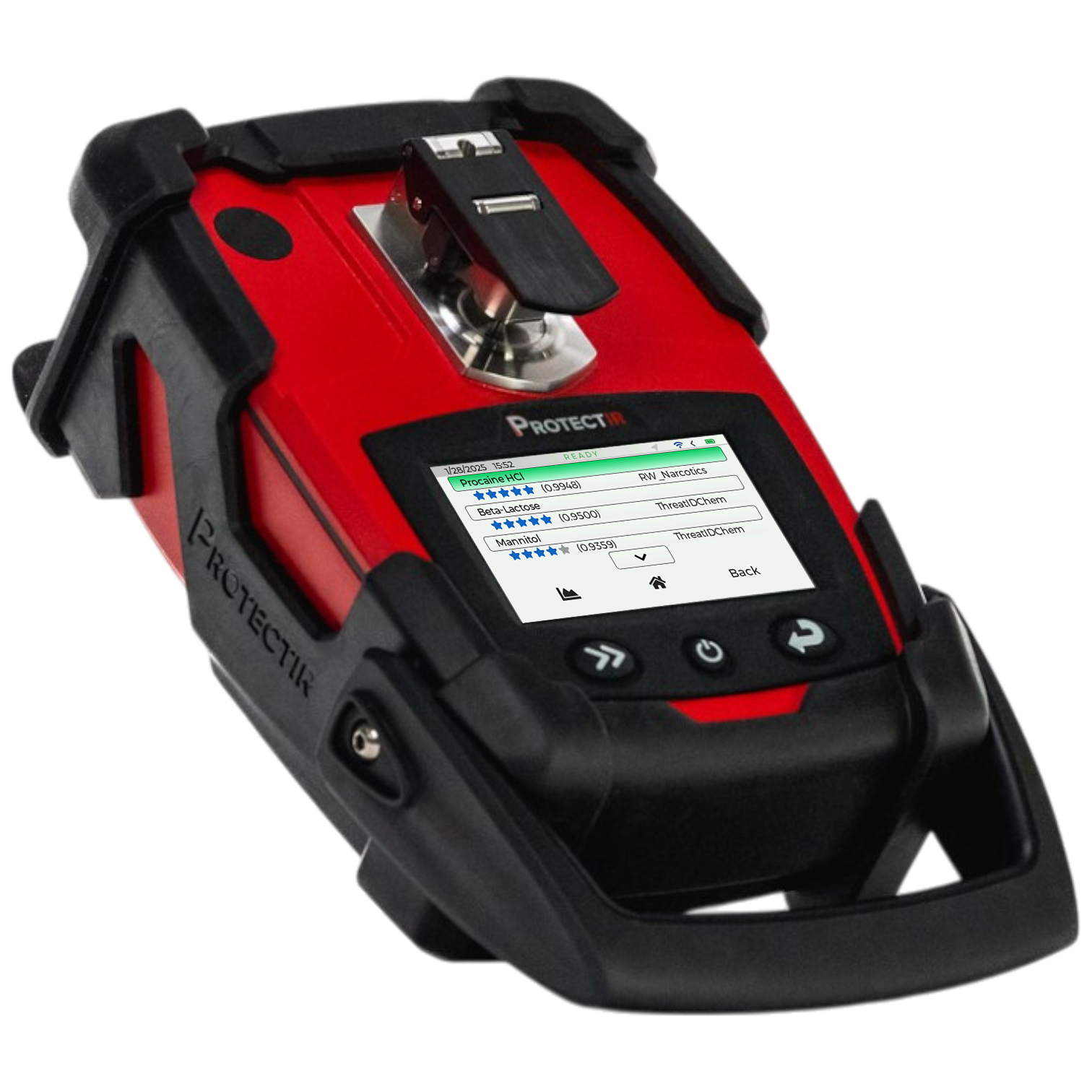
When users analyze mixtures on the ProtectIR they will now see a detailed breakdown of complex samples. Confidence ratings from 2 to 5 stars for each identified component offer a more precise interpretation of results and allow the user to understand the reliability of each identification. While other methods should always be used for confirmation in accordance with standard operating procedures, this range of confidence levels provides a clear and intuitive way to assess how strongly each mixture component is identified.
Subscribe to Our Communications
Signup to receive new product updates, technical tips and more.