Sacramento, CA | September 8-11
The purpose of the Committee for the Continuing Challenge Hazardous Materials Workshop is to protect emergency responders and the public. The Committee aims to educate and promote safe practices for hazardous materials incidents, covering inspection, response, intervention, mitigation, and investigation. This is primarily achieved through the annual “Continuing Challenge Hazardous Materials Workshop.”
Continuing Challenge serves as a central hub for knowledge dissemination, practical skills enhancement, and the fostering of crucial networking opportunities among professionals in the field. The workshop provides a platform for in-depth discussions on emerging threats, the latest technological advancements in detection and containment, and best practices refined through real-world experiences.
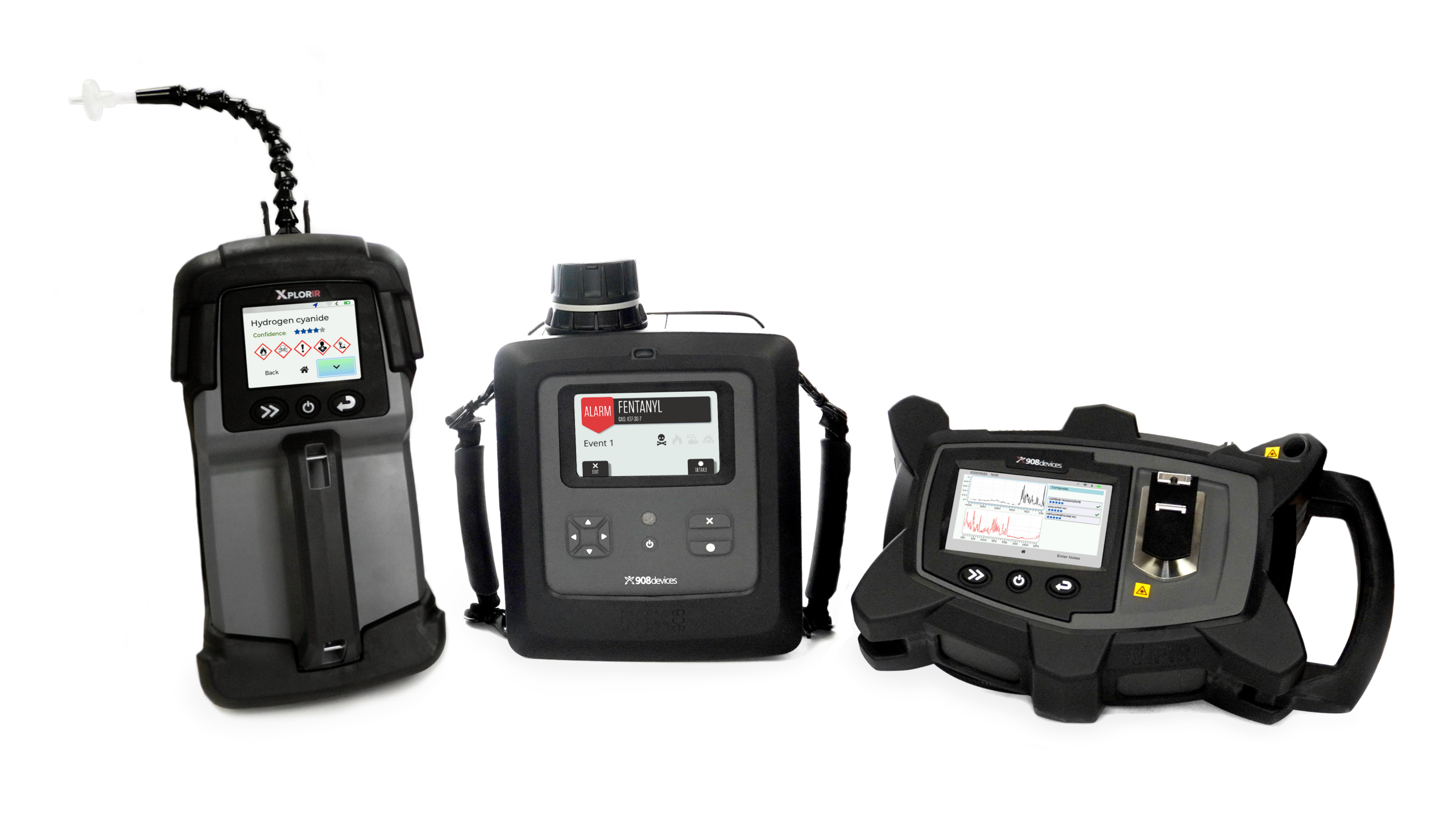
Look for 908 Devices in the Exhibit Hall.
We give attendees first hand exposure to our latest advancements in field-portable chemical and threat detection technologies.
Speaking Sessions

Chris Weber
Dr. Hazmat Inc.
Z810 Tactical Technician
Tuesday, September 8th, 7:30 am-5:00 pm
Additional Instructor: Dana Von Kolen
Tactical decisions at hazardous materials emergencies are heavily influenced by the released chemicals and their properties. Using NFPA 470 as the framework, we will make tactical decisions as hazardous materials incidents fall into place using chemical demonstrations, scenario-based and hands-on chemical identification exercises using a variety of air monitoring and sample identification equipment. We will examine the effect of chemical class, concentration, and complexity of mixtures on detection, identification, and product control. The class is highly interactive with students leading the direction of the class as we discuss scenarios culled from the news to illustrate the chemistry of hazmats.
W272 You’ve Got Gas! (and the Vapors) – Now What?
Wednesday, September 9th, 3:15-5:00 pm
Illicit labs are complex incidents due to the presence of a variety of chemicals, glassware, equipment, and chemical
processes. HazMat responders are typically unfamiliar with these situations which increases the danger to responders and the public. We will explain how these chemical processes work and show chemical processes in action. Students will have the opportunity to engage in recon, air monitoring, sampling, and chemical identification activities at simulated labs running active systems. Come join us to gain real world experience before you find yourself on such an incident. In this part we will focus on drug and CWA labs.
T416 Get to Know Chemical Processes used in Illicit Labs (Part 1 of 2)
Thursday, September 10th, 7:30-11:30am
Come take a journey through incident response to gas and vapor emergencies. We’ll take a close look at the behavior of chemicals in the air, how to detect their presence, what their various hazards are, and the importance of – and how to – identify them. We will look at actual incidents and use chemical samples to help us understand and plan for the real incidents we’re bound to respond to.
T453 Get to Know Chemical Processes used in Illicit Labs (Part 2 of 2)
Thursday, September 10th, 1:00-5:00 pm
Illicit labs are complex incidents due to the presence of a variety of chemicals, glassware, equipment, and chemical processes. Hazmat responders are typically unfamiliar with these situations which increases the danger to responders and the public. We will explain how these chemical processes work and show chemical processes in action. Students will have the opportunity to engage in recon, air monitoring, sampling, and chemical identification activities at simulated labs running active systems. Come join us to gain real world experience before you find yourself on such an incident. In this part we will focus on explosive labs.

Jeremy VanAuker
908 Devices
T232 Seeing the Whole Picture: Multi-Technology Field Analysis for Modern HazMat Response
Thursday, September 10th, 9:45-11:30 am
Room – Bear River
HazMat scenes rarely provide clear answers. Responders face mixed materials and evolving conditions that require multiple tools and perspectives. This session presents a practical approach to integrating data from various field analysis methods to build a more confident understanding of on-scene hazards. After a brief overview of how
technologies complement one another, participants will engage in a hands on exercise using diverse samples and
collection challenges. Attendees will gather and compare data, connect findings, and develop informed response
strategies. By the end, students will better understand how combining analytical approaches enhances situational awareness and supports safer, more effective decision-making.
T273 Gas and Vapor Identification: Integrating FTIR into Modern Hazmat Response
Thursday, September 10th, 3:15-5:00 pm
Room – Redwood
FTIR has long been used for identifying solids and liquids, but recent advances now enable real-time gas and vapor analysis in the field. Modern handheld FTIR systems overcome challenges such as water vapor and CO2 interference while achieving sensitivity at toxicologically relevant levels. This workshop explores how gas-phase
FTIR delivers specific, quantitative identification of airborne hazards and integrates with traditional tools like PIDs, multi-gas meters, and colorimetric tubes. Through field case studies and practical examples, participants will see how FTIR enhances situational awareness, confirms unknowns, and supports critical decisions on PPE, isolation zones, and remediation during complex chemical incidents.
F216 Field Identification of Controlled Substances – Case Studies from the Field
Friday, September 11th, 7:30-9:15 am
Room – Garden
A trend towards increasing potent synthetic and designer opioids, cathinones, cannabinoids, and other substances has affected the ability to detect and identify controlled substances in the field. Synthetic drugs tend towards higher potency, and therefore lower concentration in mixtures. This dangerous combination has fueled a significant rise in overdose deaths, highlighted in the DEA’s “One Pill Can Kill” campaign. Learn how synthetic and designer drugs have fueled a trend towards counterfeit pills, a rise in lethal overdoses, and how field detection technology has evolved to keep pace with these trends.
Rapid Identification of Chemical Threats
Detect and identify thousands of chemical threats—from bulk to trace—in just seconds. Our comprehensive suite delivers the clarity you need to stay safe and act decisively when every second counts.