
At a recent industry conference, one theme kept surfacing in conversations with correctional staff: synthetic cannabinoids, commonly known as K2 or Spice, have become one of the hardest contraband problems facilities face today. It is not hard to see why. These drugs are cheap, easy to disguise, and increasingly linked to medical emergencies inside housing units.
A Problem That Is Getting Harder to Ignore
Synthetic cannabinoids are lab made chemicals designed to mimic THC, but their effects are far less predictable. Officers and medical staff have reported outbreaks of extreme paranoia, hallucinations, and sudden violent behavior tied to K2 use, sometimes affecting several people in a housing unit at once. A recent NPS Discovery forensic toxicology report found evidence of 5F-ADB exposure in roughly 80% of 45 inmate death cases tested from jails and correctional facilities between August 2023 and March 2025. Specifically, researchers detected the primary metabolite and degradation product of 5F-ADB, a highly potent synthetic cannabinoid, in 36 of the 45 cases.
The scale of the smuggling problem is significant. An investigation by The Marshall Project, in partnership with several Ohio newspapers, found that nearly half of all drugs recovered in Ohio prisons are suspected K2 paper. Texas corrections officials have described similar “serious challenges,” noting that these substances are often engineered specifically to evade traditional detection methods.
Why Paper Makes This So Difficult
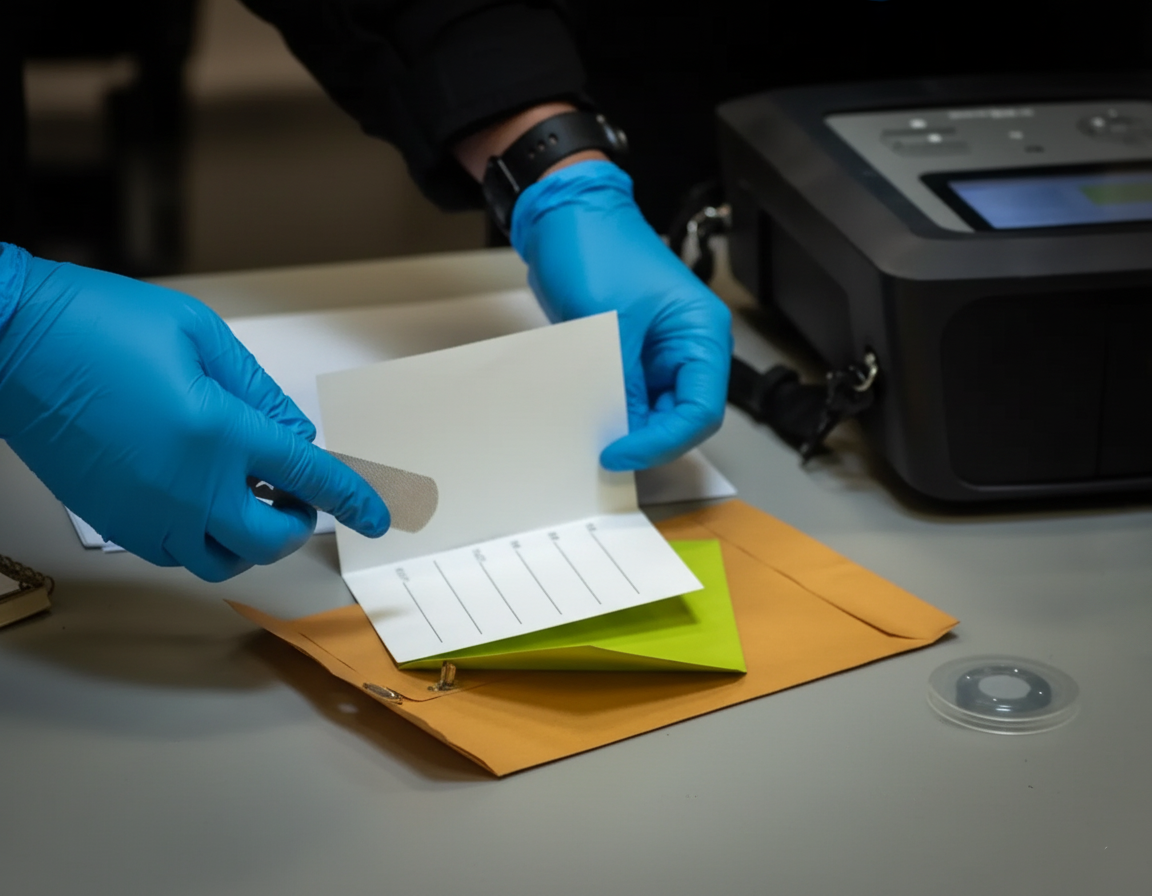
Unlike most contraband, K2 and Spice are frequently distributed as a liquid that is sprayed or soaked onto ordinary paper. That paper can arrive as legal mail, a child’s drawing, a greeting card, or a page torn from a book. Once inside, it can be smoked, steeped, or chewed by an inmate, and it is nearly invisible to the naked eye.
This is not a failure of diligence on the part of mailroom or intake staff. It is a genuine detection gap. Standard drug tests were built around traditional narcotics, and synthetic cannabinoids were designed by clandestine chemists specifically to slip past them. Facilities that rely on visual inspection or older colorimetric methods are working with tools that were never built for this threat.
Closing the Gap at the Point of Entry
This is where facilities need a way to screen suspicious paper and other materials quickly, without needing a full toxicology lab on site. MX908 gives corrections staff that capability. It can identify synthetic cannabinoids and other trace substances directly from paper, mail, and other porous materials in the field, in seconds, without requiring the item to be sent out for lab testing. That means intake, mailroom, and housing unit staff can screen for K2 and Spice at the moment a threat arrives, rather than after an inmate is already in medical distress.
For facilities managing a growing and evolving contraband threat, that kind of front line detection is not just a convenience. It is a way to protect both staff and the people in their custody before a crisis starts.
A Concern Worth Acting On
Correctional staff did not create this problem. They inherited a drug that was engineered to be hard to catch. But facilities now have better tools to close that gap than they did even a few years ago. Screening technology built for this exact threat can help staff identify K2 and Spice before it circulates through a unit, giving them back some control over a problem that has felt, for too long, unpredictable.
Sources
- NPS Discovery, “Synthetic Cannabinoid Detections Surge Among Fatal Overdoses of Inmates in Jails & Correctional Facilities”
- The Marshall Project / Columbus Dispatch, Cincinnati Enquirer, Akron Beacon Journal, Canton Repository investigation into synthetic cannabinoid smuggling in Ohio prisons: https://www.thepostathens.com/article/2026/04/synthetic-cannabinoids-trends-in-ohio-prisons
- WFAA, “Serious challenges: Texas officials work to curb synthetic cannabinoid use in state prisons”: https://www.wfaa.com/article/news/crime/texas-officials-synthetic-cannabinoid-use-in-state-prisons/287-931ee3ad-6029-4ff1-912b-35cdb86c8798
- Corrections1, “Suboxone & K2: 7 things correctional officers need to know”: https://www.corrections1.com/products/facility-products/body-scanners/articles/suboxone-and-spice-7-things-cos-need-to-know-dXEYM4DDnTD5PWpm/
- Massachusetts Department of Correction, news release on drug and contraband prevention efforts: https://www.mass.gov/news/massachusetts-department-of-correction-announces-latest-results-from-efforts-to-prevent-drugs-and-contraband-in-state-prisons