Customs and border agencies are facing growing pressure to detect illicit narcotics and enforce trade compliance at ports of entry. As trafficking methods become more sophisticated, inspectors must identify both trace-level drug residues on vehicles and cargo, as well as bulk chemical shipments that may be intentionally mislabeled to evade VAT, tariffs, or regulatory controls.
To meet these challenges, modern customs inspection technology is evolving beyond single-purpose tools toward integrated, multi-layered detection workflows.
Trace Detection: Identifying Hidden Narcotics and Precursors
Trace detection plays a critical role in modern border security operations. Even when narcotics are well concealed, microscopic residues left on surfaces, packaging, or transport vehicles can indicate illicit activity.
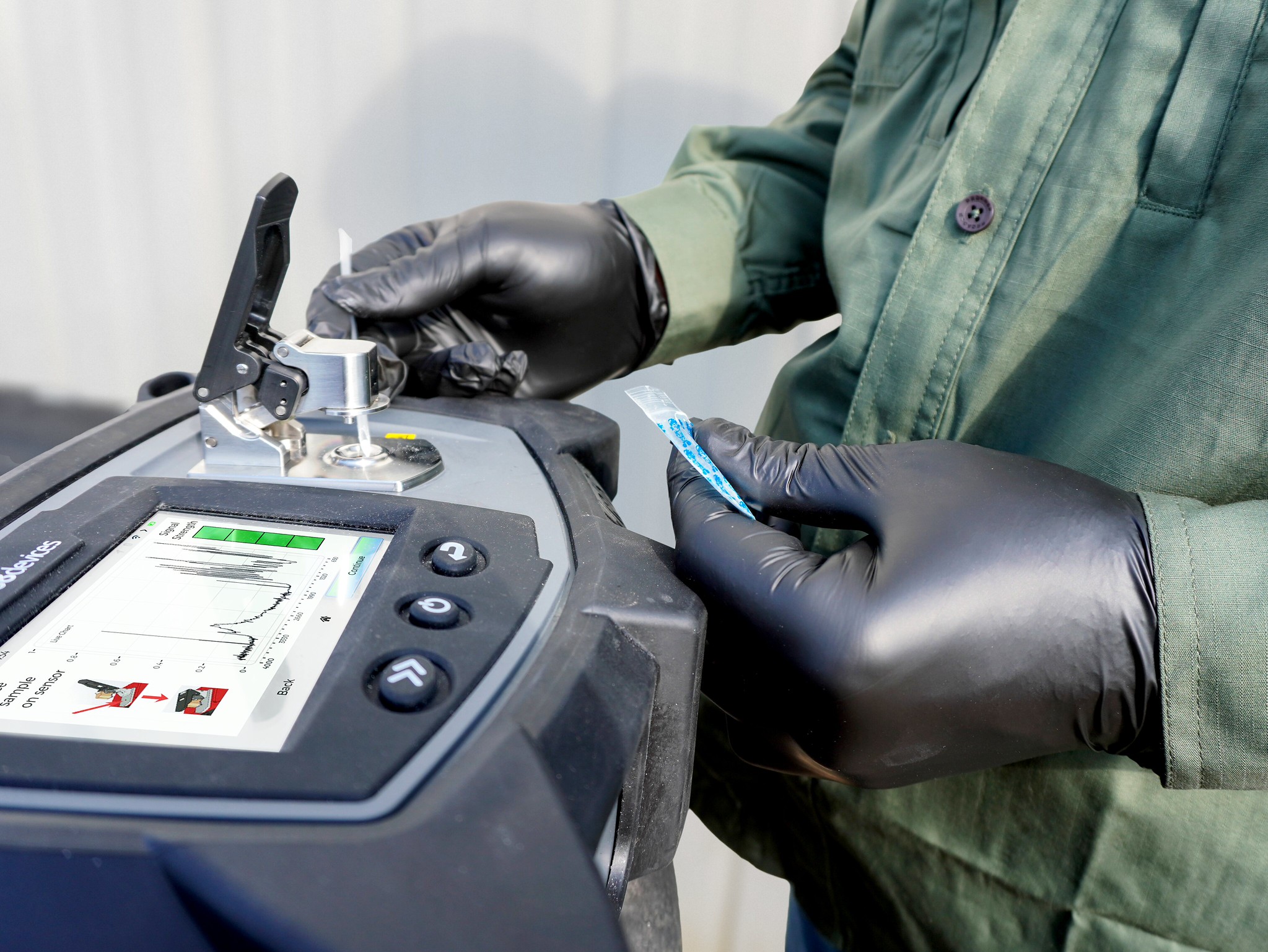
Field-deployable trace detection tools such as the MX908 enable inspectors to rapidly detect trace amounts of narcotics and chemical precursors during routine inspections. By identifying these low-level indicators early, agencies can prioritize secondary screening, improve interdiction rates, and reduce reliance on time-consuming manual searches.
Bulk Detection: Verifying Chemical Identity with Confidence
While trace detection reveals indicators of illicit activity, bulk detection is essential for verifying the true identity of declared chemical shipments. Mislabeling and fraudulent declarations remain common tactics used to bypass trade compliance requirements.
Bulk chemical identification tools like VipIR address this challenge by providing rapid, high-confidence analysis of solid and liquid substances in the field. VipIR’s Smart Spectral Processing (SSP) combines Raman and FTIR data to deliver reliable identification—even when samples are complex, degraded, or intentionally mislabeled. This capability helps inspectors make faster, and more defensible decisions at the point of inspection.
A Layered Detection Strategy for Ports of Entry
The most effective customs inspection technology strategies combine trace detection and bulk detection into a single, layered workflow. Trace tools such as MX908 flag potential threats, while bulk identification platforms like VipIR confirm the chemical nature of suspicious shipments. Together, they reduce uncertainty, minimize false positives, and streamline enforcement without disrupting legitimate trade.
Enabling Intelligence-Led Customs Enforcement
By integrating trace and bulk detection technologies into daily operations, customs agencies are shifting from reactive enforcement to proactive, intelligence-led screening. Inspectors gain clearer insights in real time, allowing them to intercept illicit narcotics, enforce trade compliance, and maintain efficient cargo flow across borders.
As global trade and trafficking risks continue to evolve, layered detection approaches will remain a cornerstone of effective border security and customs enforcement.

LIVE EVENT
Trace to Bulk: Smarter Chemical Screening at the Border
Join our live webinar on Thursday, March 19th with Border Security Report. This webinar is free to attend.