Transnational drug trafficking remains one of the most complex and profitable criminal enterprises in the world. According to the United Nations Office on Drugs and Crime (UNODC) World Drug Report 2025, global estimated illegal production of cocaine reached more than 3,708 tons in 2023—a 34% increase from the prior year, with trafficking routes increasingly spanning multiple continents. Criminal networks routinely exploit commercial supply chains—shipping containers, industrial equipment, and air cargo shipments—to conceal drugs and move illicit product across borders. As globalization expands legitimate trade, it also creates new vulnerabilities, demanding ever-stronger collaboration among law enforcement agencies worldwide. Recent years have seen a rise in more sophisticated concealment techniques, multimodal transportation routes, and coordinated criminal partnerships across the Americas, Europe, and Oceania. Against this backdrop, the international dismantling of a Colombia–Chile-Australia drug pipeline, known as Operation Black Swan, marks a significant victory in disrupting these global networks.
A Transnational Network Hiding in Plain Sight
Operation Black Swan began when Chilean authorities, which included the Valparaíso Regional Prosecutor’s Office, its Criminal Analysis and Investigative Focus Unit (SACFI), the National Customs Service, and the Investigative Police (PDI), identified suspicious commercial activity involving shipments from Colombia to the Chilean ports of San Antonio and Valparaíso. These shipments were then to be moved from the ports to Santiago International Airport, and subsequently by air to Australia. What at first appeared to be routine foreign trade transactions soon revealed a sophisticated drug-smuggling operation.
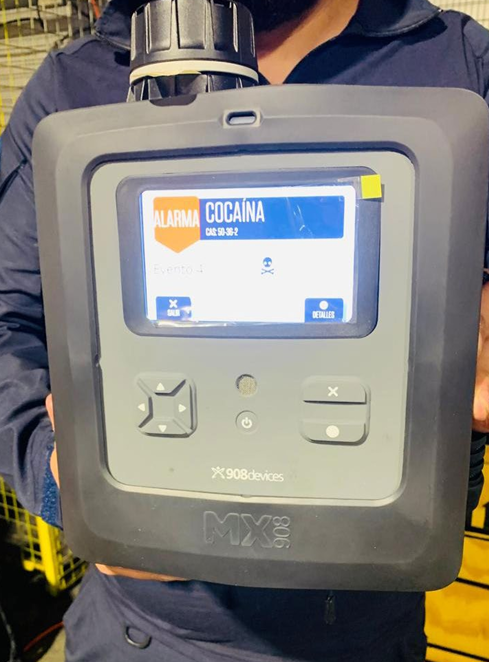
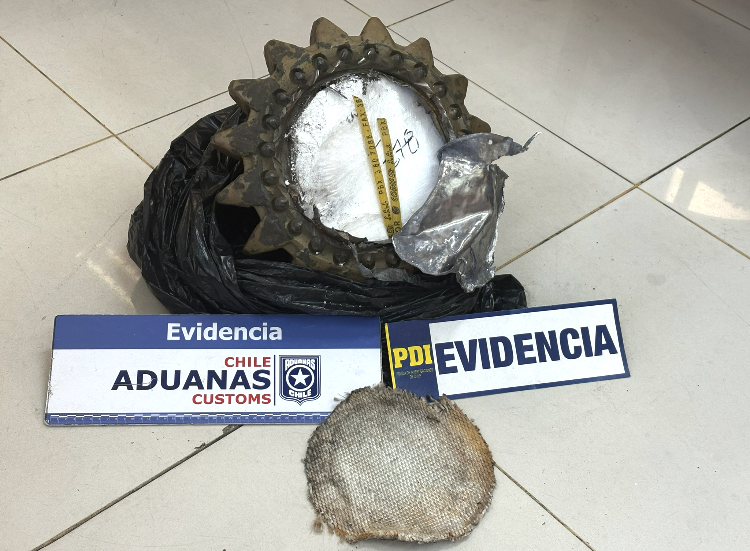
During inspections at off-port warehouses, Chilean authorities detected that large industrial drilling components used in mining operations had been modified internally, which officers believed concealed drugs. Customs officers quickly turned to their handheld MX908 device for trace chemical identification and swabbed the exterior of the drilling equipment. An immediate MX908 alarm for cocaine confirmed their suspicions.
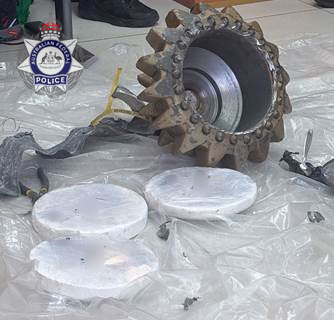
This result gave officers the intelligence needed to further inspect and dismantle the equipment. In total, investigators discovered 34.9 kilograms of cocaine hidden inside the machinery, valued at approximately 10 million Australian dollars.
A High-Stakes Controlled Delivery Across Continents
Recognizing the scale and reach of the criminal network, Chilean authorities initiated an international controlled delivery in partnership with police counterparts in Australia. After removing the cocaine and reconstructing the mining equipment, two PDI officers traveled with the shipment to Australia, where the Australian Federal Police (AFP) worked alongside them to monitor its delivery.
In Western Sydney, AFP surveillance identified the individuals who attempted to collect and dismantle the equipment. Investigators observed drilling and grinding sounds coming from a residential property as two Australians allegedly tried to access what they believed to be cocaine. Both suspects were arrested on site. Simultaneously, search warrants were executed in Chile, leading to the arrests of three Chilean nationals.

A Model for International Cooperation
Operation Black Swan demonstrates what’s possible when agencies share intelligence, act decisively, and pursue criminal networks across continents. As global supply chains grow more complex, these coordinated operations will be essential to protecting borders, trade systems, and public safety.
Chilean officials noted that the operation reinforces the need to protect the legitimacy and reputation of global port infrastructure—particularly in Valparaíso, a critical maritime hub. National Prosecutor Ángel Valencia explained that “the city of Valparaíso needs its port to be competitive, and to be competitive globally, it needs to be a safe port. That is, it needs to be free of the reputation of being used by criminal networks. For that to happen, it is necessary that when they try to do so, we dismantle them, ruin their operation, arrest them, and send them to prison.”1
Making the Invisible Visible
Operation Black Swan underscores how the MX908 device enhances investigative efficiency and interagency coordination, empowering officers to detect, confirm, and disrupt global narcotics trafficking operations with confidence.
Utilizing high-pressure mass spectrometry, the MX908 rapidly identifies trace residues of narcotics on surfaces and packaging. Chilean customs officials have successfully employed their suite of MX908 devices in multiple drug smuggling cases, and have recently purchased several VipIR analyzers for in-depth identification of bulk chemicals and complex mixtures. Using both the MX908 and VipIR in tandem offers a complementary, confirmatory approach to chemical threat detection that enhances both speed and accuracy.
As drug traffickers use increasingly complex concealment methods to hide both drugs and precursor chemicals, and as the chemical signatures of synthetic narcotics are constantly evolving, customs officials need modern detection tools to quickly and efficiently confirm the identity of suspicious materials with high confidence, ensuring stronger enforcement and safer borders.
References:
Other news sources used in this blog: